Visa Inc. (NYSE:V) HOLD
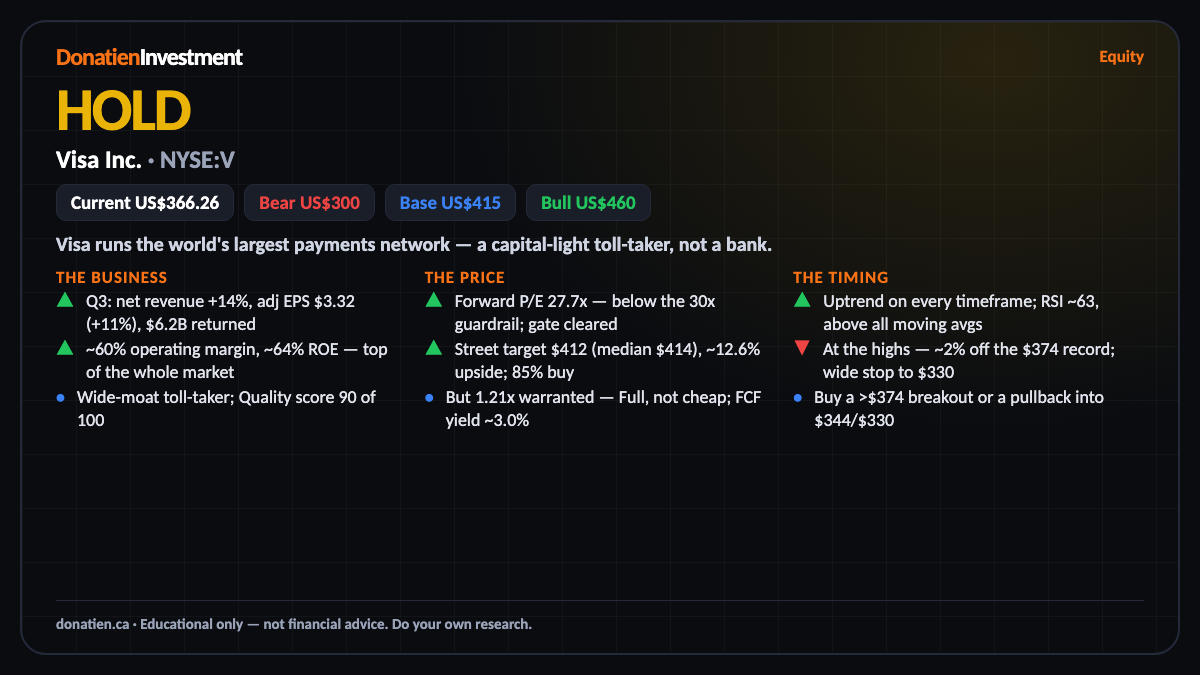
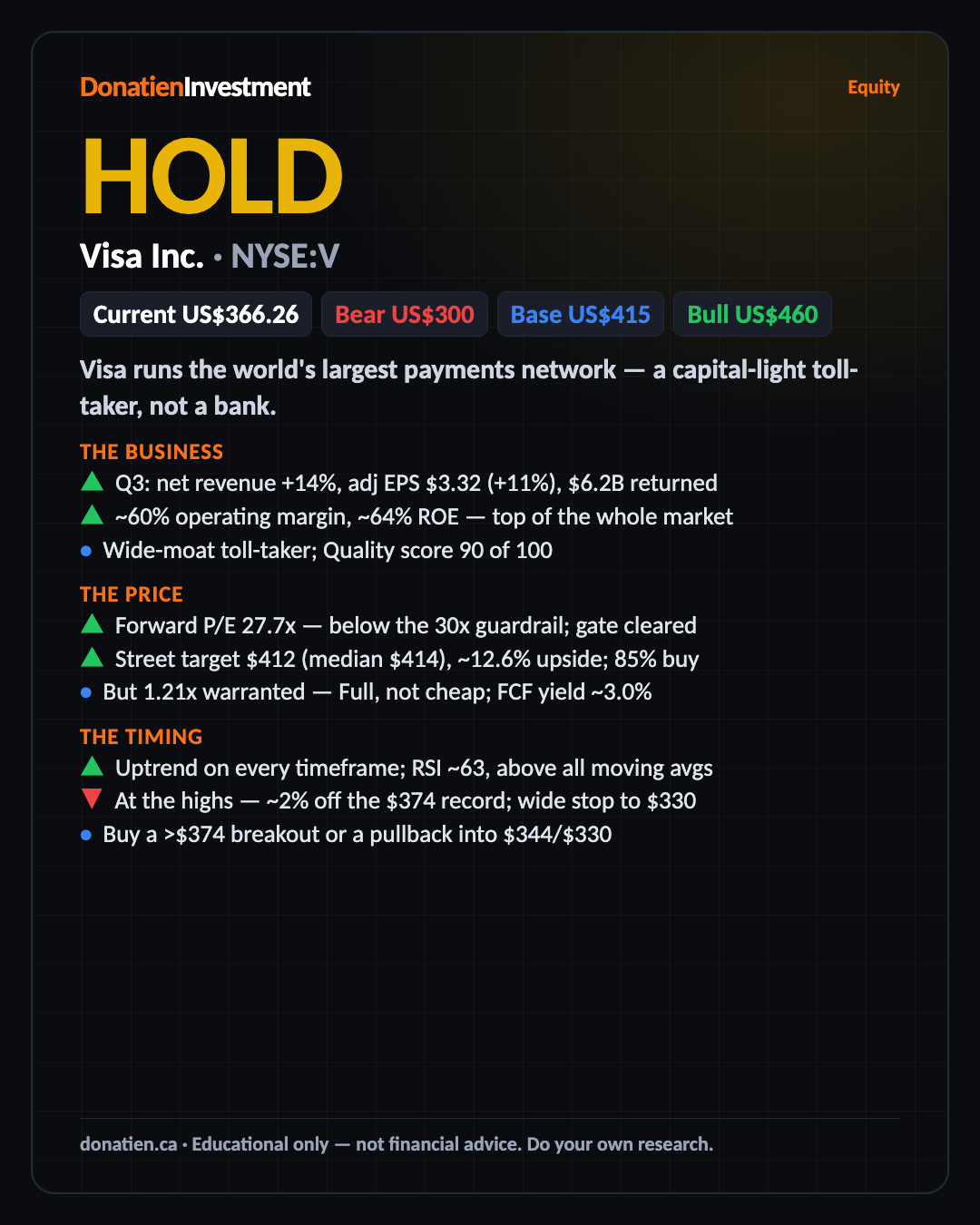
A wide-moat compounder we now rate BUY on the medium and long term — the Q3 beat-and-raise cleared the valuation gate that had it capped, so on forward earnings it is Full, not Expensive. But the short-term call is HOLD: the stock sits at its highs with no low-risk entry today. A hold now; accumulate on weakness for the longer term.
Visa runs the world's largest payments network — a capital-light toll-taker, not a bank. It takes a small cut of every card swipe, tap and online checkout across 200-plus countries, earning ~60% operating margins in any rate environment because its revenue is a slice of spending, not a spread on loans.
The business
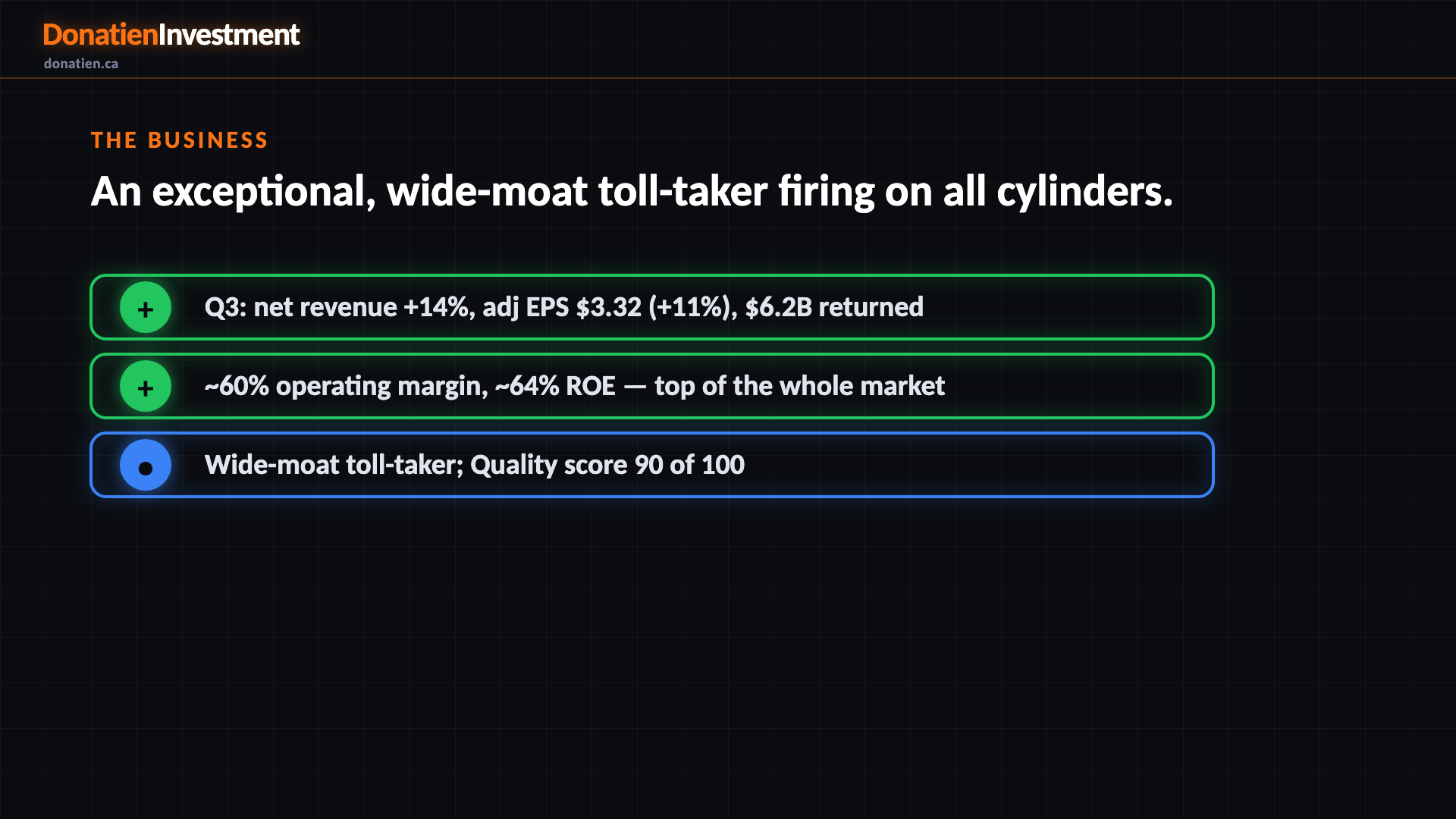
Visa is a textbook wide-moat business, and it scores ninety on quality. Its fiscal third quarter was a clean beat: net revenue up fourteen percent, adjusted earnings of three dollars thirty-two, up eleven percent, payments volume up ten percent and cross-border volume up thirteen percent — its highest-margin line. Operating margins run near sixty percent and return on equity near sixty-four, which sit at the very top of the entire market, not just financials. And it returned six-point-two billion dollars to shareholders in the quarter through buybacks and dividends. This is a capital-light machine that takes a toll on spending in any rate environment.
The price
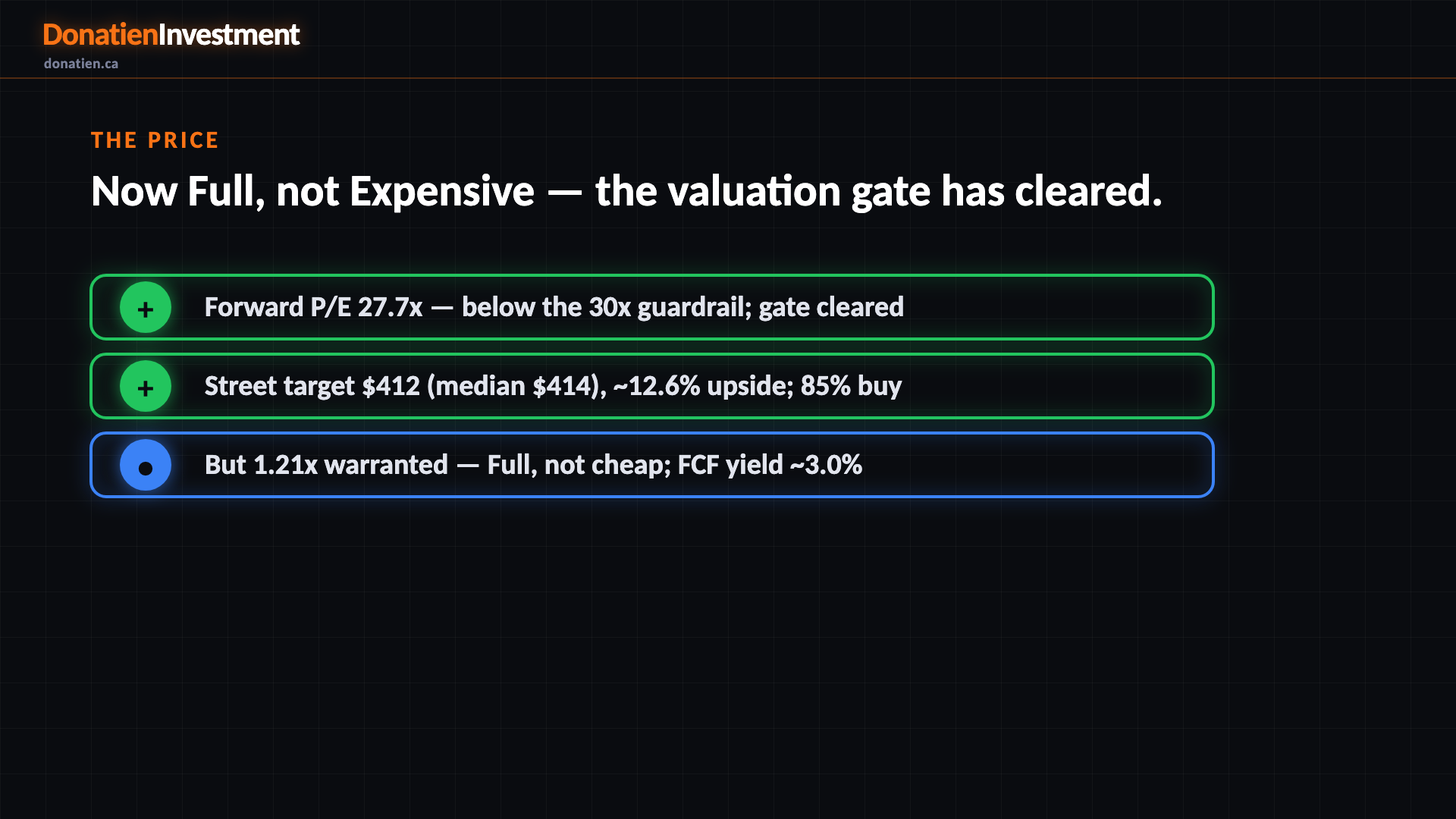
This is what changed. The prior two reports valued Visa on trailing earnings at about thirty-one times and landed Expensive, which capped the signal at hold. On the correct forward basis for a capital-light compounder, the Q3 beat lifted forward earnings, so Visa now trades about twenty-eight times — below the thirty-times guardrail — and one-point-two-one times its rate-warranted multiple, which is Full rather than Expensive. That cleared the valuation gate and lifted the medium and long calls to buy. The street agrees: a four-hundred-twelve-dollar consensus target, roughly thirteen percent of upside, and eighty-five percent of sixty-two analysts rate it buy. It is priced for its quality, not cheap.
The timing
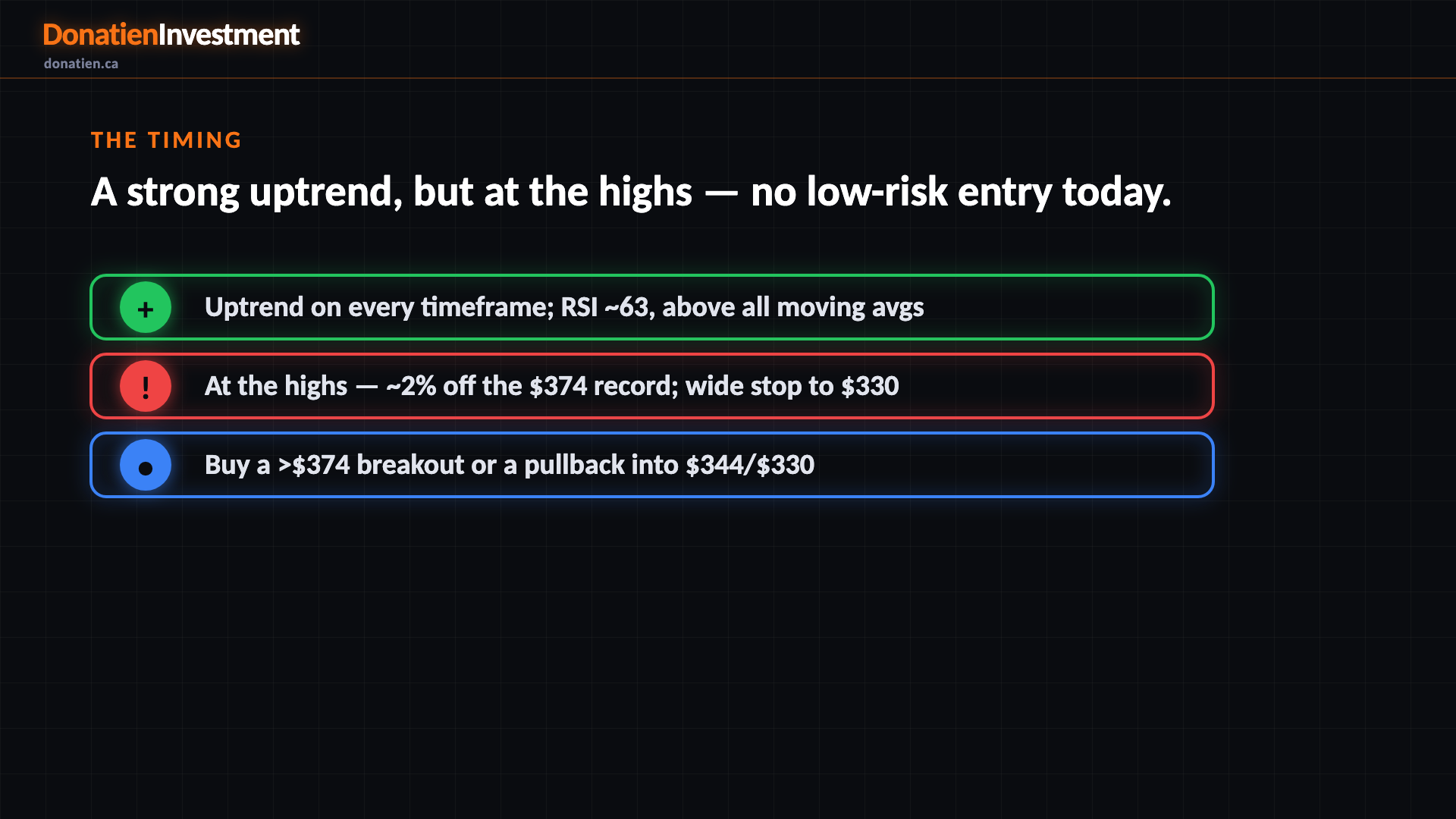
The tape is genuinely constructive — an uptrend on every timeframe, price above every key moving average, momentum healthy but not overbought with the RSI around sixty-three, and Visa outperforming both the market and financials. So why is the short-term call a hold? Because entering right at the highs, about two percent off the fifty-two-week record, means a wide stop down to the three-forty-four fifty-day line and then three-thirty. There is no low-risk entry today. The disciplined way in is to buy a breakout above three seventy-four on real volume, or a pullback into the three-forty-four to three-thirty zone that holds — and accumulate on weakness rather than chase.
What could go wrong
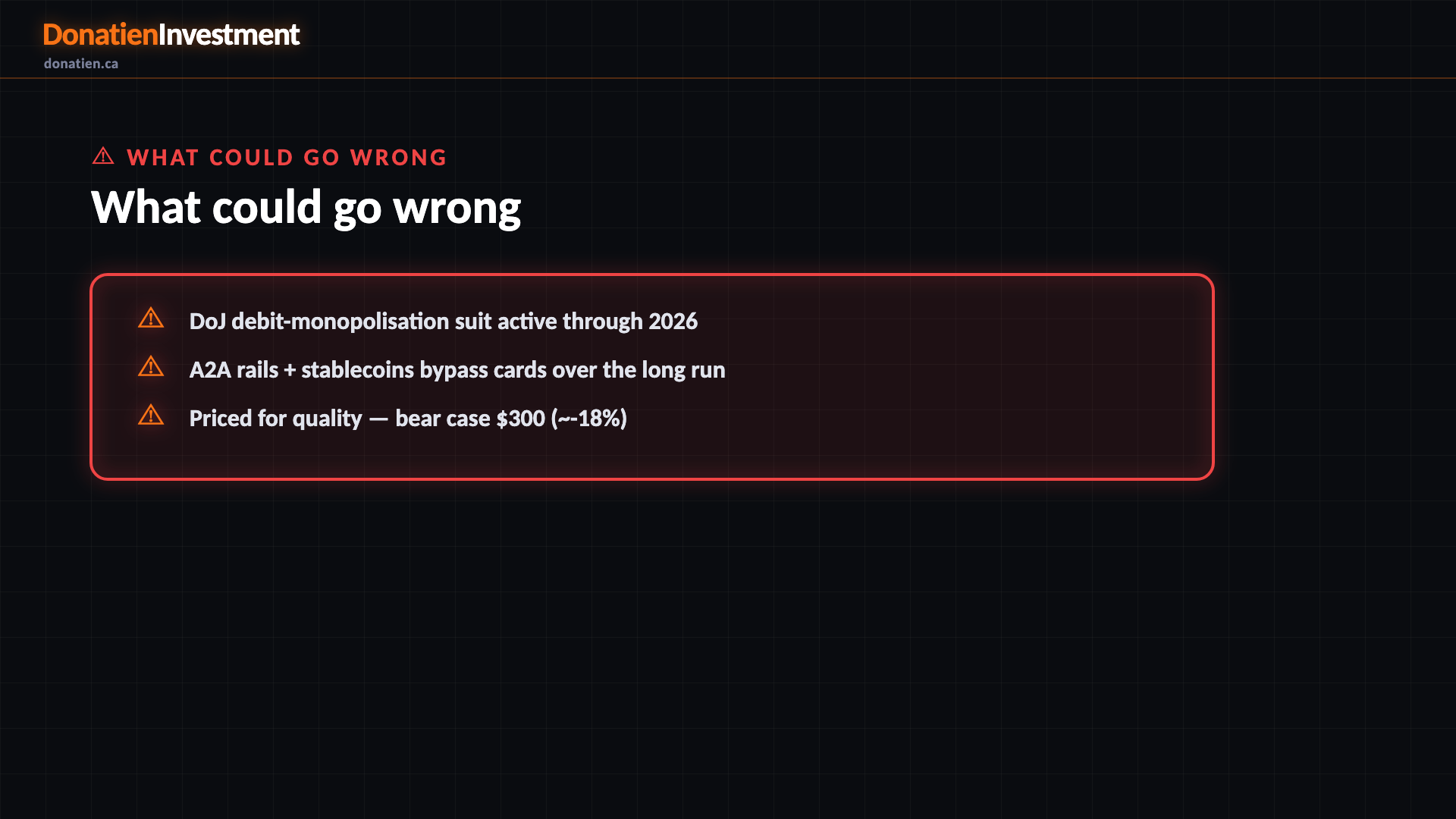
The risks carry equal weight to the story. First, regulation: the Justice Department's debit-monopolisation suit is active through 2026, and an adverse remedy could structurally lower Visa's US take-rate. Second, disruption: account-to-account rails and, longer-term, stablecoins can route payments around the card networks — a slow-burn structural overhang, not a near-term cliff, but real. Third, the price itself: Visa is Full, not cheap, so a consumer slowdown or a cross-border deceleration that de-rated the multiple toward its rate-warranted level takes you to the bear case near three hundred dollars, about eighteen percent below the price. That downside is exactly why entry conviction stays at wait near the highs.
Risk vs Reward
Over the next twelve months the base case is about four hundred fifteen dollars, a fifty-five percent probability — steady mid-teens revenue growth and a forward multiple that holds, landing near the street's consensus, roughly thirteen percent up. The bull case is about four hundred sixty, a twenty-five percent chance if cross-border re-accelerates and the DoJ suit settles benignly, around twenty-six percent up. The bear case is about three hundred, a twenty percent chance on an adverse debit remedy or a consumer slowdown, roughly eighteen percent down. That is a probability-weighted value near four hundred three — modestly above the price, consistent with a buy that carries no near-term entry edge.
The verdict
So the honest read is a hold today, easing to a buy on the medium and long horizons. The business is exceptional and the valuation finally cleared the gate that had it capped — but at the highs there is no low-risk entry, and the regulatory and disruption risks are real. Accumulate on weakness: buy a breakout above three seventy-four on volume, or a held pullback into three-forty-four to three-thirty, rather than chase the record. Educational, not financial advice.
Read the full report on donatien.ca →