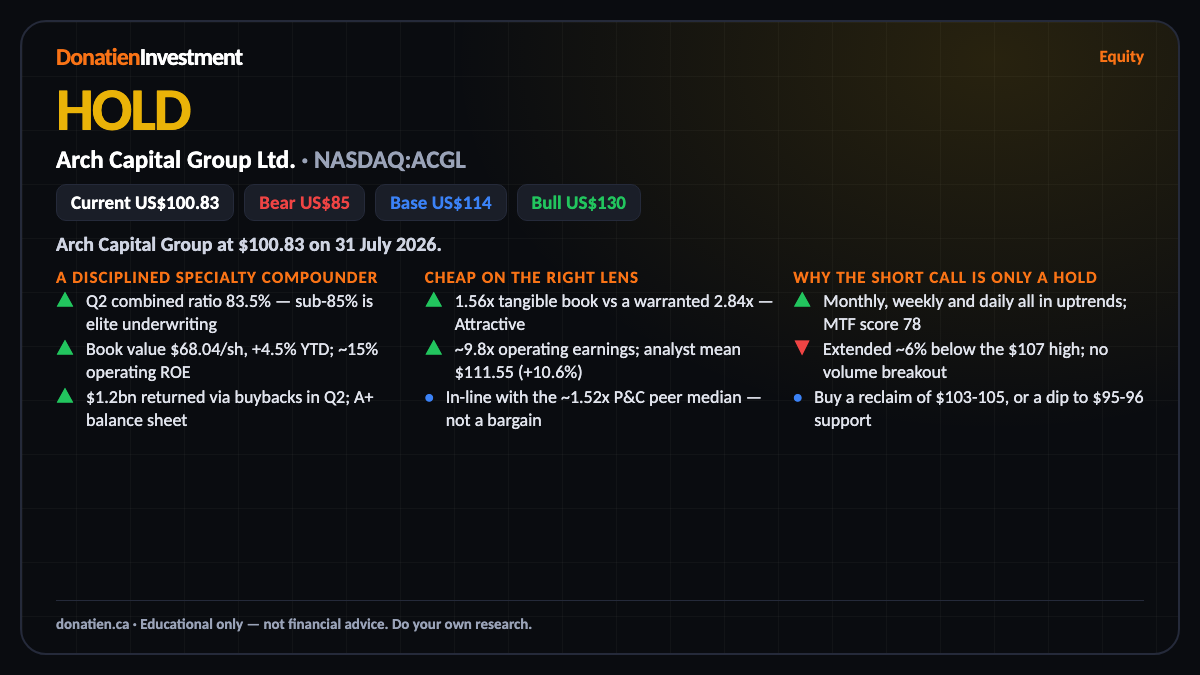
Arch Capital Group Ltd. (NASDAQ:ACGL) HOLD
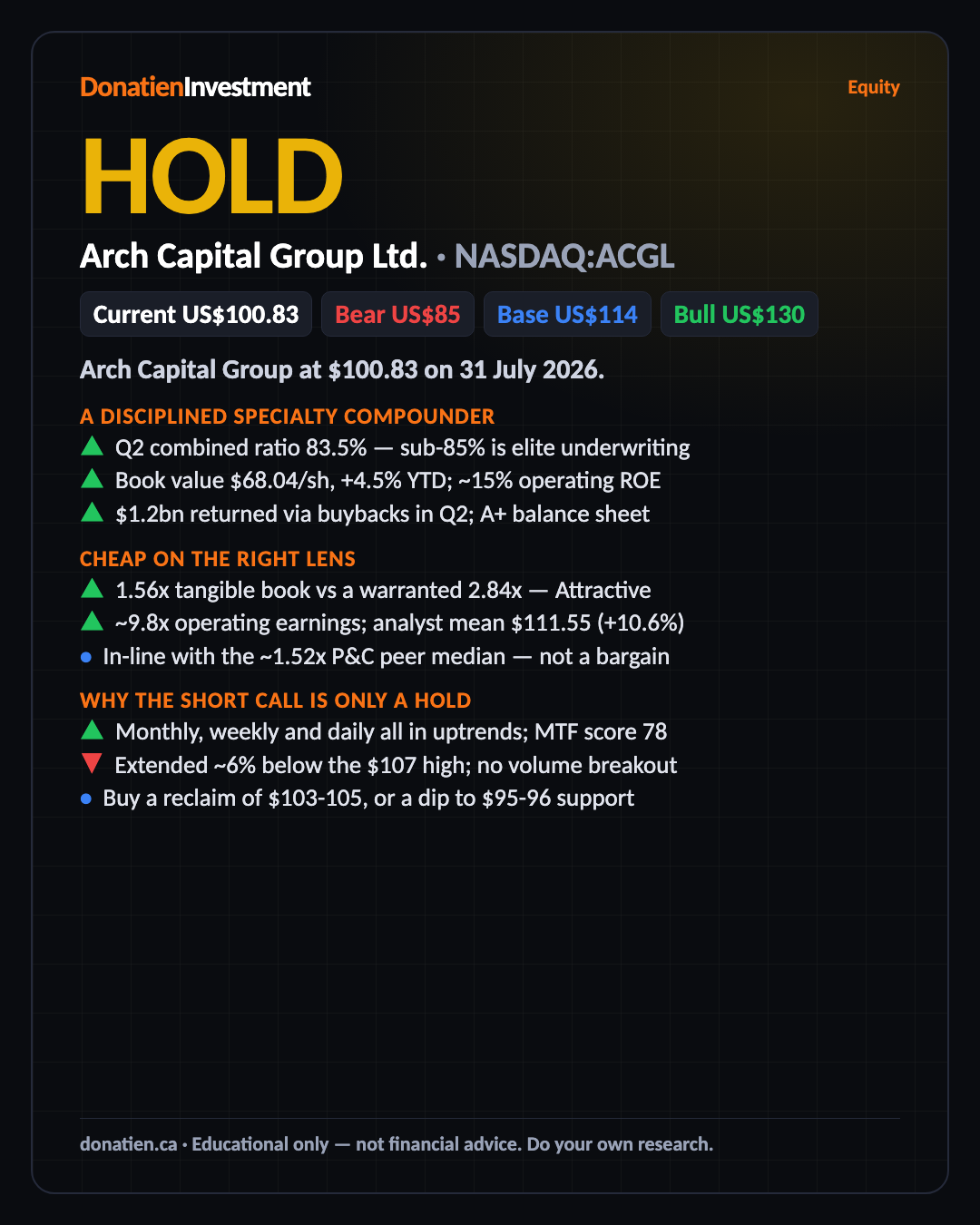
A high-quality specialty insurer trading below the multiple its returns justify — but with no fresh technical trigger near its highs, the near-term call is a HOLD. It is a Buy to accumulate for the medium and long term: 1.5x book against a warranted 2.84x, ~15% operating ROE and a compounding book value. A hold now; buy weakness for the longer term.
Arch Capital Group at $100.83 on 31 July 2026. It is a Bermuda-based specialty insurer, reinsurer and US mortgage insurer that gets paid premiums today to cover losses years later — so the scorecard is the combined ratio, book value and return on equity, not revenue. Quality 83, Valuation 72 (Attractive), but Timing only 58: the short-term signal is a HOLD, while the medium and long horizons are BUY.
A disciplined specialty compounder
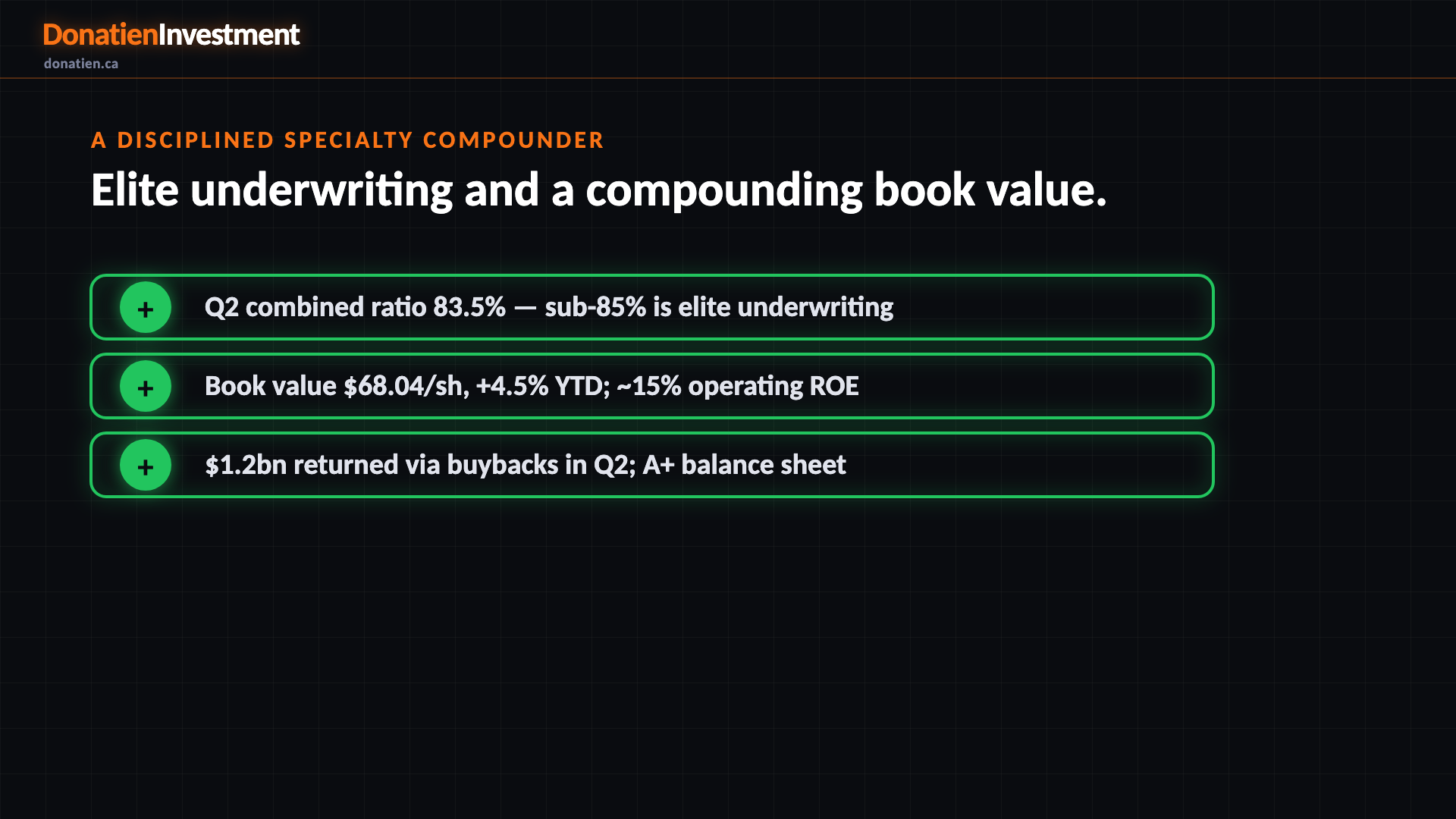
Arch is a Bermuda specialty insurer and reinsurer that gets paid premiums today to cover losses years later, so the right scorecard is the combined ratio, book value and return on equity, never revenue. Q2 was elite: a consolidated combined ratio of 83.5 percent — under a hundred means an underwriting profit, and under 85 is best-in-class. Reinsurance ran at 77.5 percent, the mortgage book at 22.8 percent. Book value per share compounded to 68 dollars, up 4.5 percent this year, while Arch returned 1.2 billion dollars through buybacks on an A-plus balance sheet. Quality scores 83.
Cheap on the right lens
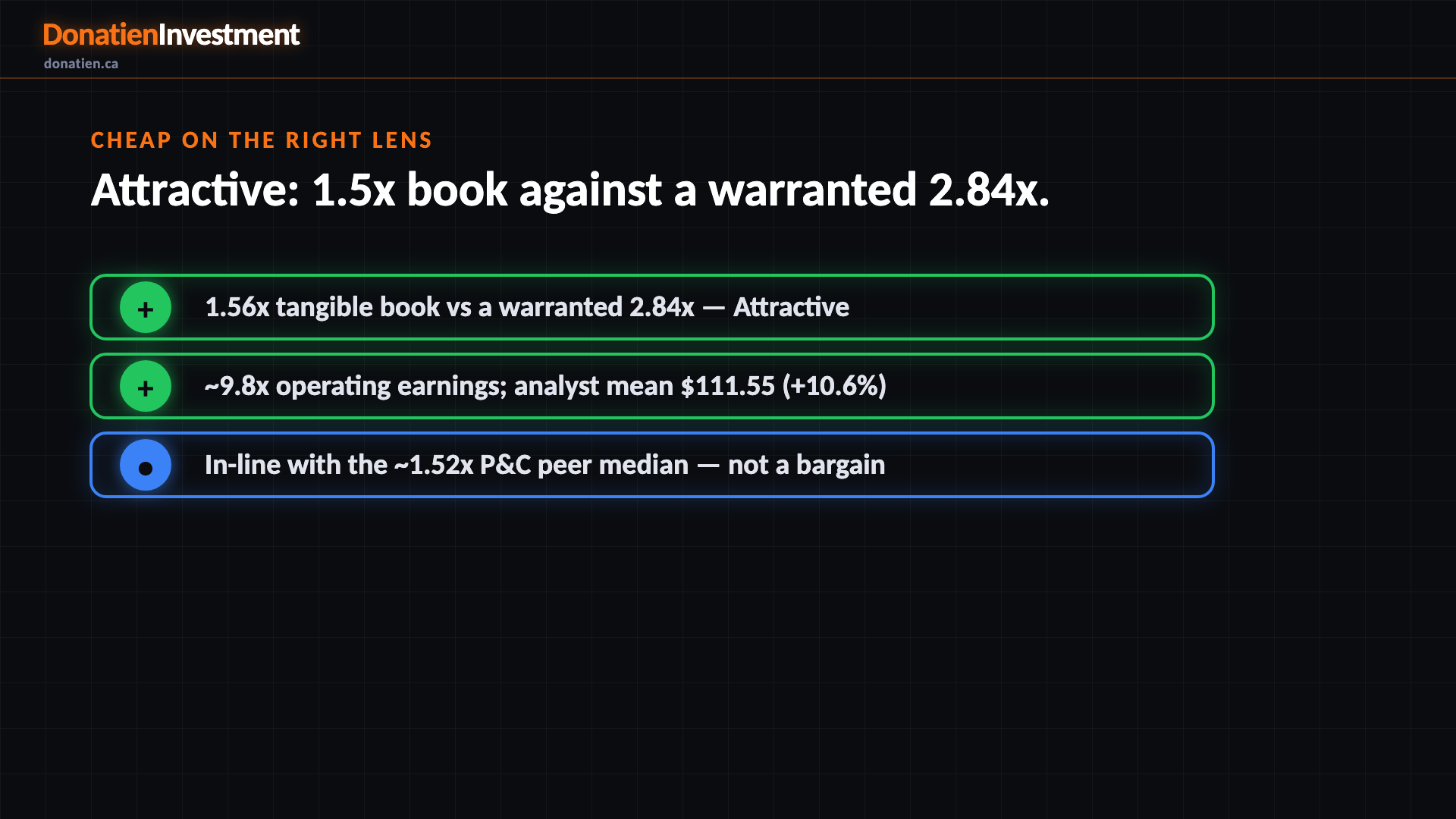
Here is why the medium and long calls are buys. An insurer's fair price-to-book is set by how far its returns beat its cost of equity — and Arch earns about a 15 percent operating return on equity while trading at just 1.56 times tangible book, against a warranted multiple near 2.84. That is genuinely cheap: valuation scores 72, Attractive. The trailing P/E of 7.9 is flattered by investment gains and reserve releases, so the cleaner lens is about 9.8 times operating earnings. Analysts sit at a rising mean target of 111.55 dollars, roughly 11 percent above the price. The caveat: at 1.48 times book it is only in line with the P&C peer median, so it is cheap on fundamentals but not a bombed-out bargain.
Why the short call is only a HOLD
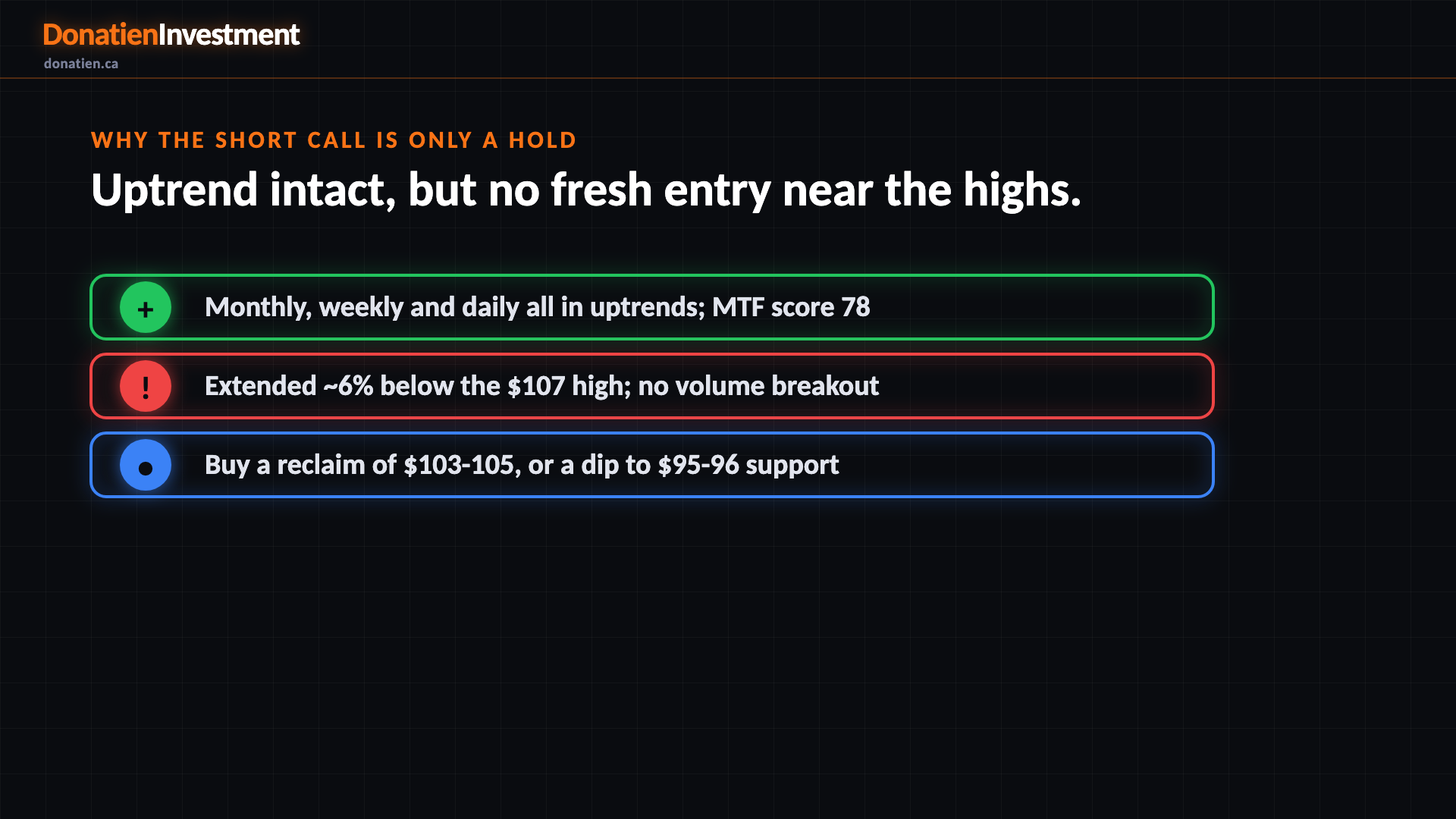
The trend is up — monthly, weekly and daily frames are all rising, above a rising 50- and 200-day line, and the multi-timeframe score is a healthy 78. But the near-term entry is not fresh. The stock is up 22 percent off its low and sits about 6 percent below its 52-week high of 107.09, the daily RSI is a neutral 52, and it slipped after the 28 July results as the market fretted about a softening cycle. With no volume breakout and the earnings catalyst behind us, the short-term signal is capped to a flat HOLD — this is a technical cap, not a half-size starter. Buy on a confirmed reclaim of 103-105, or a pullback into 95-96 support.
What could go wrong
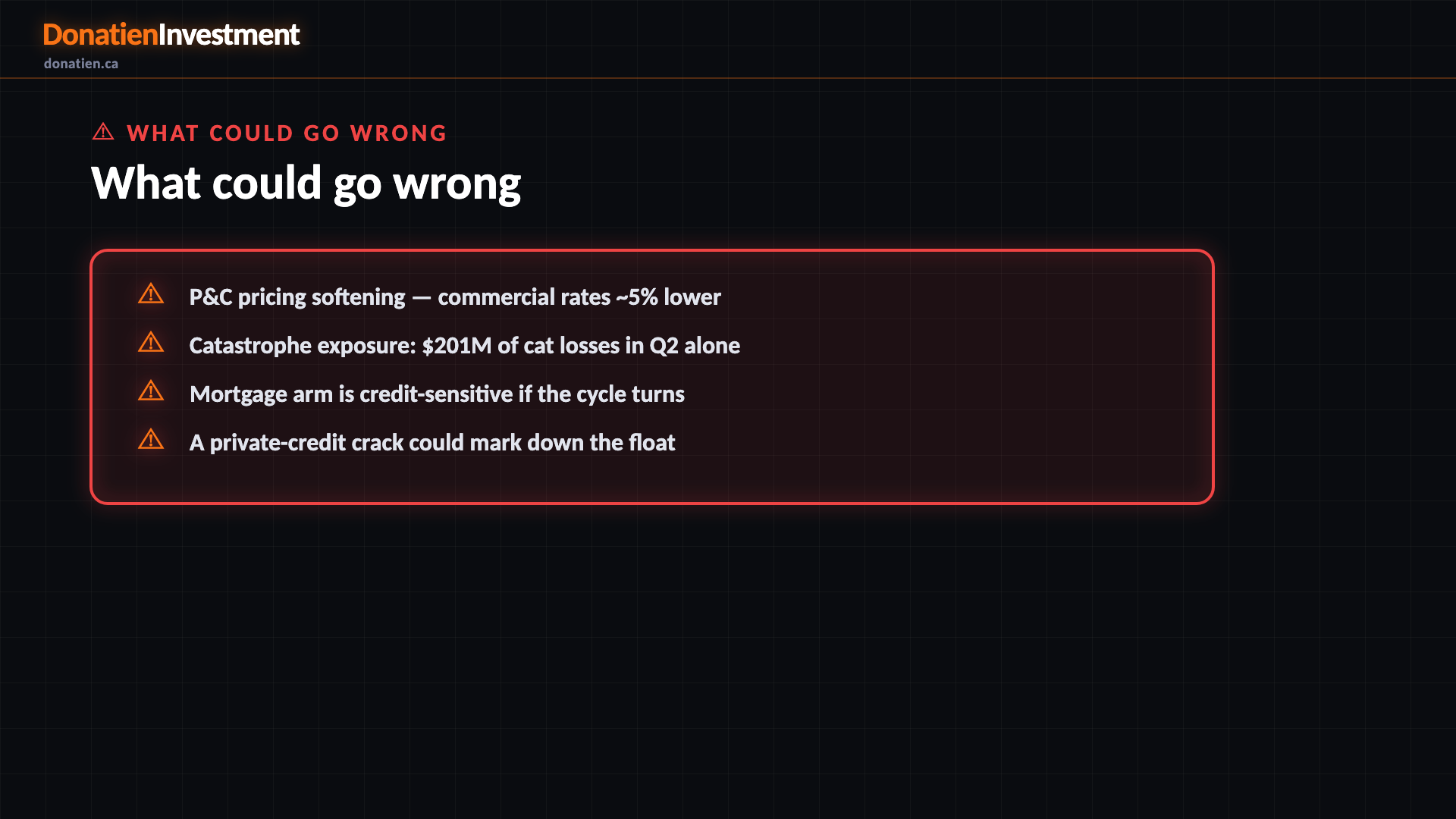
The risks are real and carry equal weight to the case. The underwriting cycle is turning: commercial rates are down about 5 percent, the Insurance segment's combined ratio has pushed to 98.5 percent, and consensus models earnings normalizing roughly 24 percent lower as reserve releases and catastrophe luck fade. Catastrophes are a live, two-sided exposure — Q2 alone carried 201 million dollars of cat losses from the Iran-Hormuz conflict and US storms. The mortgage-insurance book is highly profitable today but credit-sensitive if unemployment rises. And the macro report's building private-credit crack could mark down the investment portfolio that increasingly carries earnings. The bear case is 85 dollars, about 16 percent below the price.
Risk vs Reward
Over twelve months the base case is 114 dollars at a 55 percent probability — the soft cycle nips margins, but book value keeps compounding and buybacks below book add accretion, landing on the rising analyst mean, about 13 percent up. The bull case is 130 dollars, a 25 percent chance, if the market genuinely hardens and the multiple re-rates toward 1.9 times book — about 29 percent up. The bear is 85 dollars, 20 percent, if the soft market deepens and a private-credit crack bites — about 16 percent down. That is a probability-weighted value near 112 dollars, roughly 11 percent above the price.
The verdict
So it is a hold now, a buy to accumulate for the medium and longer term. The near-term tape is a coin-toss digesting near the highs, so there is no rush — wait for a confirmed reclaim or buy the dip. But this is a high-quality, high-return specialty compounder trading below the multiple its returns justify, and the entry conviction for the accumulation is half-size: start scaling in on weakness rather than chasing the highs. Educational, not advice.
That's my read on Arch Capital. Financial Freedom. Together.
Read the full report on donatien.ca →