Macro Economics Energy-shock inflation meeting resilient demand
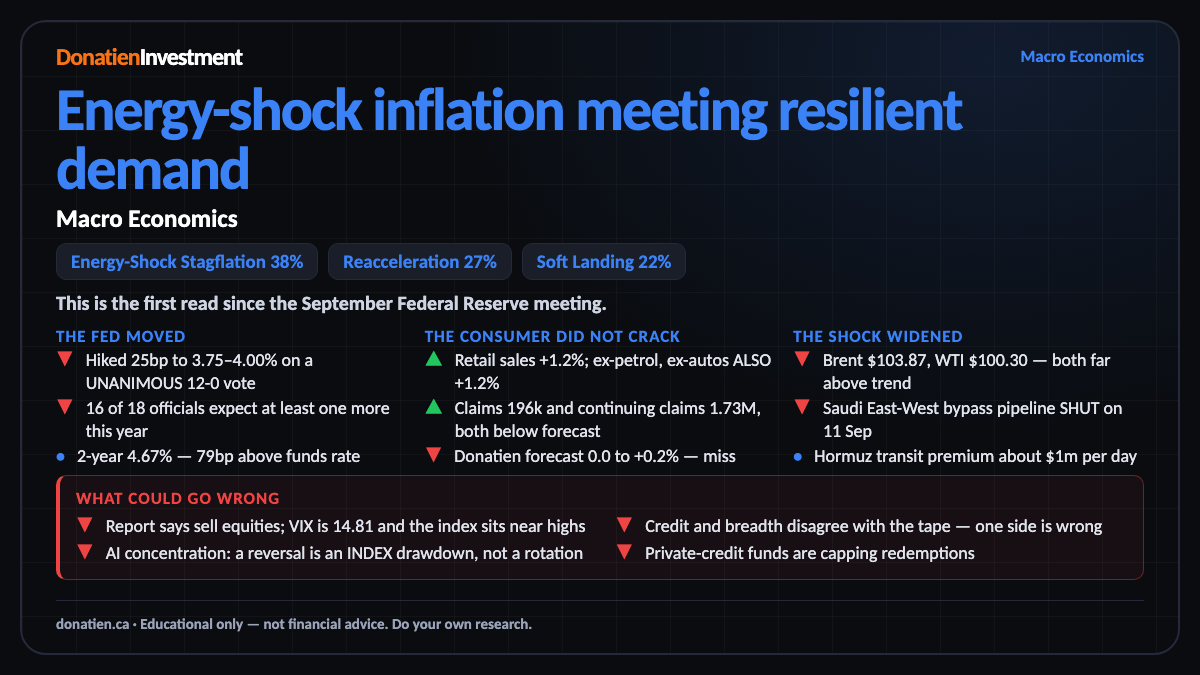
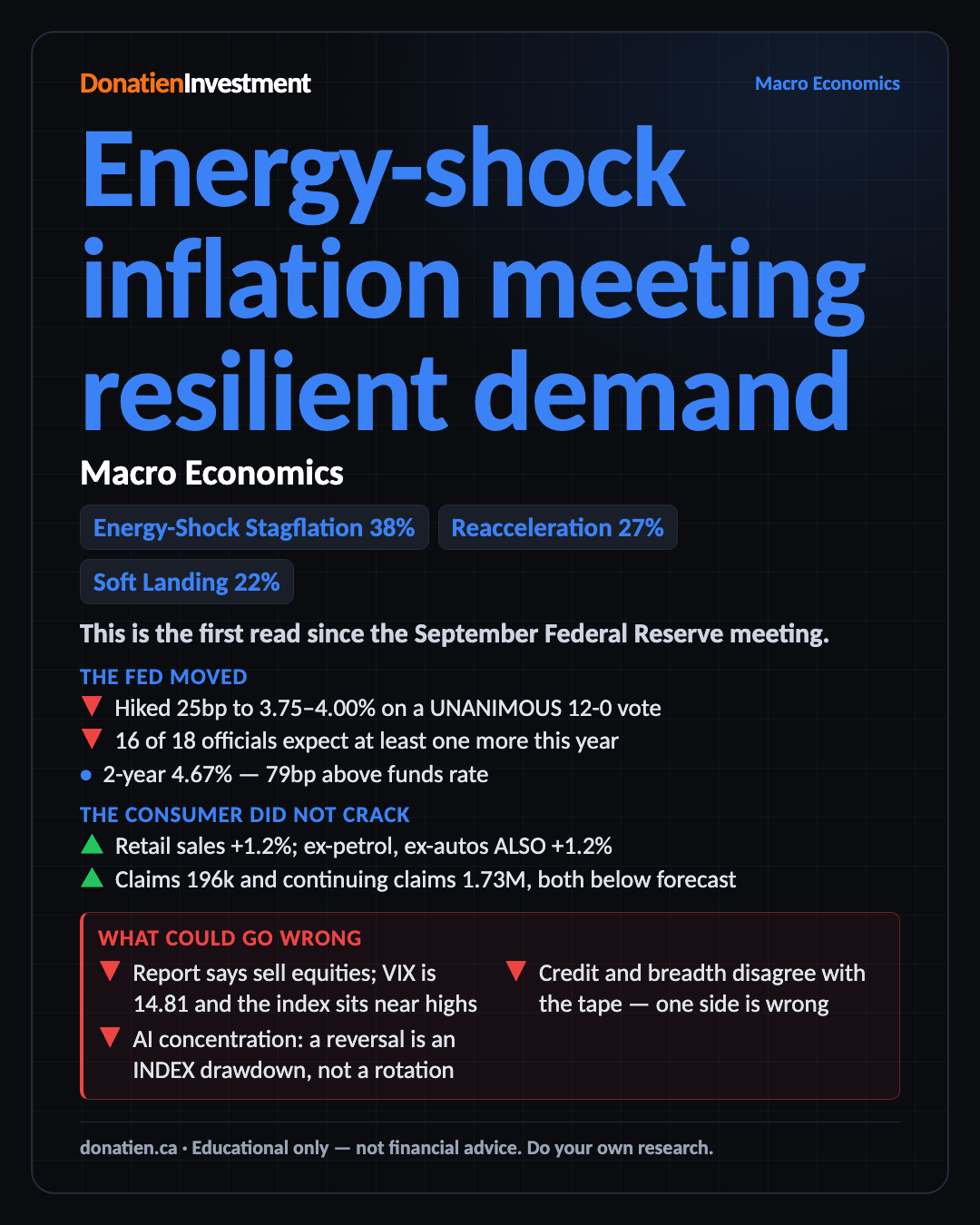
The Fed raised rates 25bp to 3.75–4.00% on a unanimous 12–0 vote, with oil above $100. The last report forecast a hold and a cracking consumer. Both were wrong.
This is the first read since the September Federal Reserve meeting. Two of the calls in the previous report were refuted by the data, and both of them were calls Donatien made against the consensus. That is reported here as loudly as anything that went right.
The Fed moved
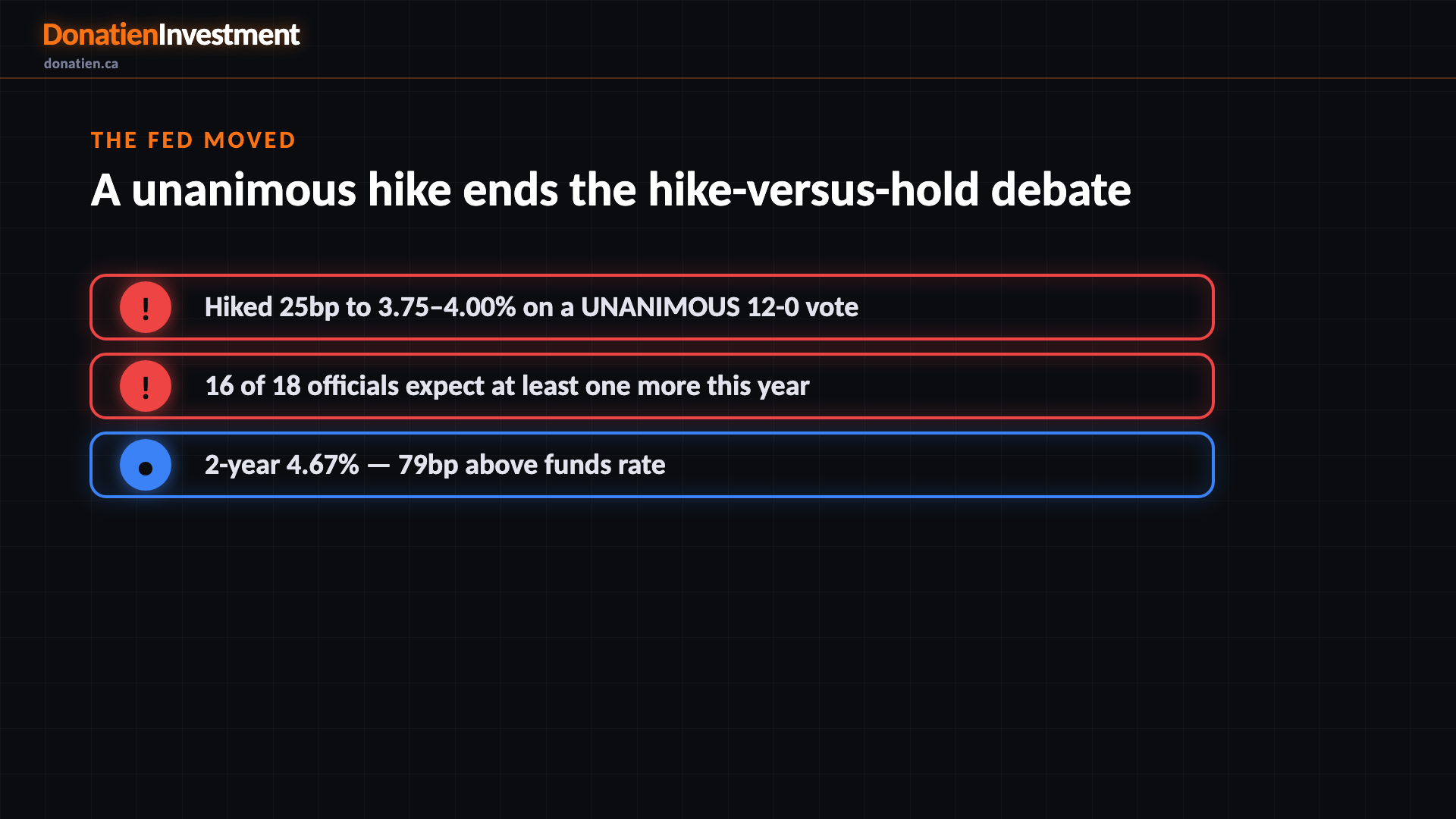
The Federal Reserve raised rates by a quarter point to a range of 3.75–4.00%. The vote was unanimous, 12–0. That matters more than the quarter point itself: in July the same committee split 9–3, and Donatien's forecast leaned on those dissenters holding the line. They did not. Sixteen of the eighteen participants now expect at least one further rise this year. The clearest confirmation is in the 2-year Treasury at 4.67% — 79 basis points above the effective funds rate. The front end is pricing more tightening, not less.
The consumer did not crack
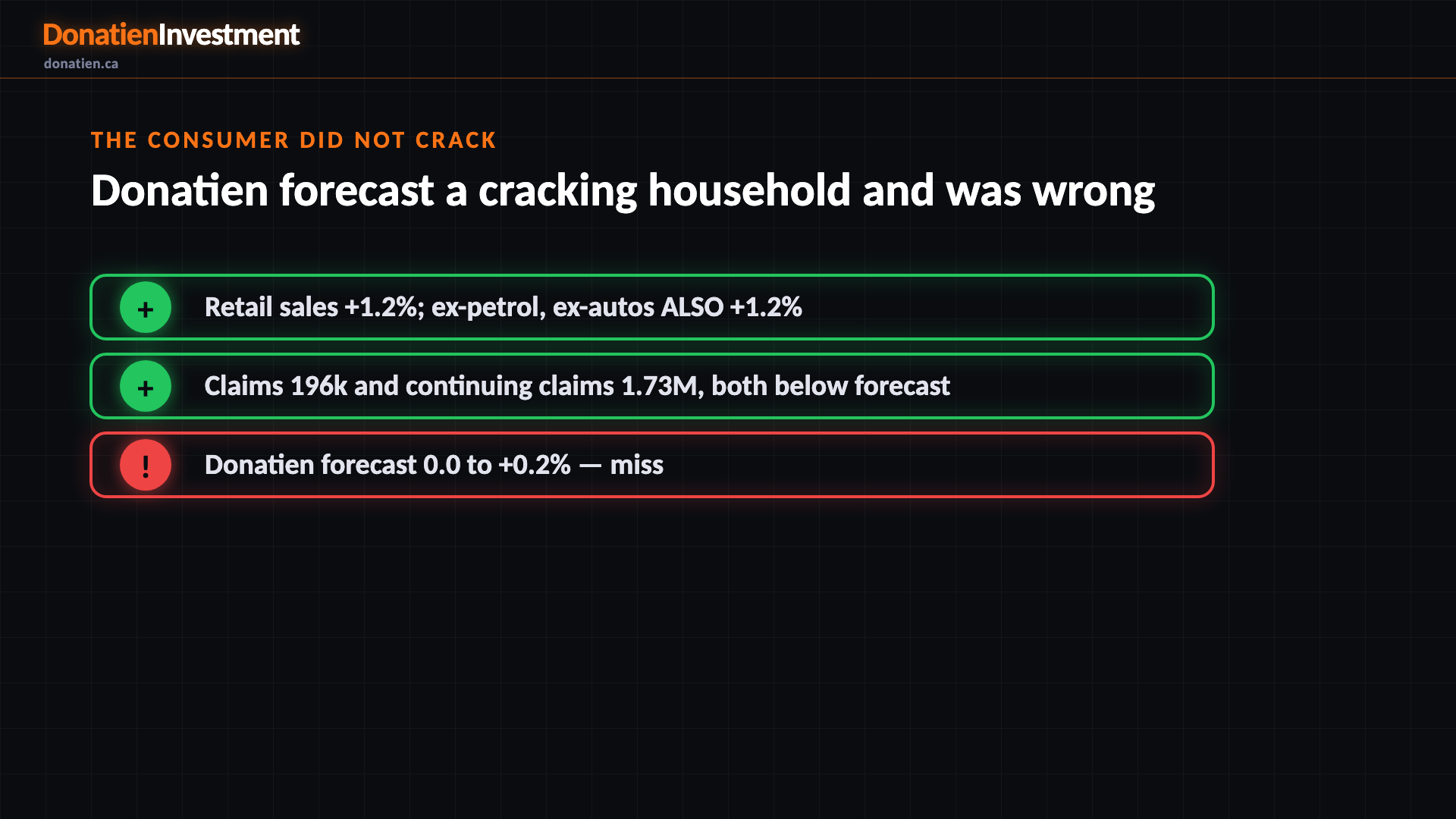
The previous report argued the household was breaking. August retail sales rose 1.2%. Strip out petrol and cars, where a price spike could have flattered the number, and the figure is still 1.2% against a consensus of 0.2% — so this was real spending, not an oil bill in disguise. Jobless claims fell to 196k, below forecast, and continuing claims fell to 1.73M. Donatien forecast retail sales of 0.0% to +0.2%. That is not a small miss, and the bias behind it has now fired five times.
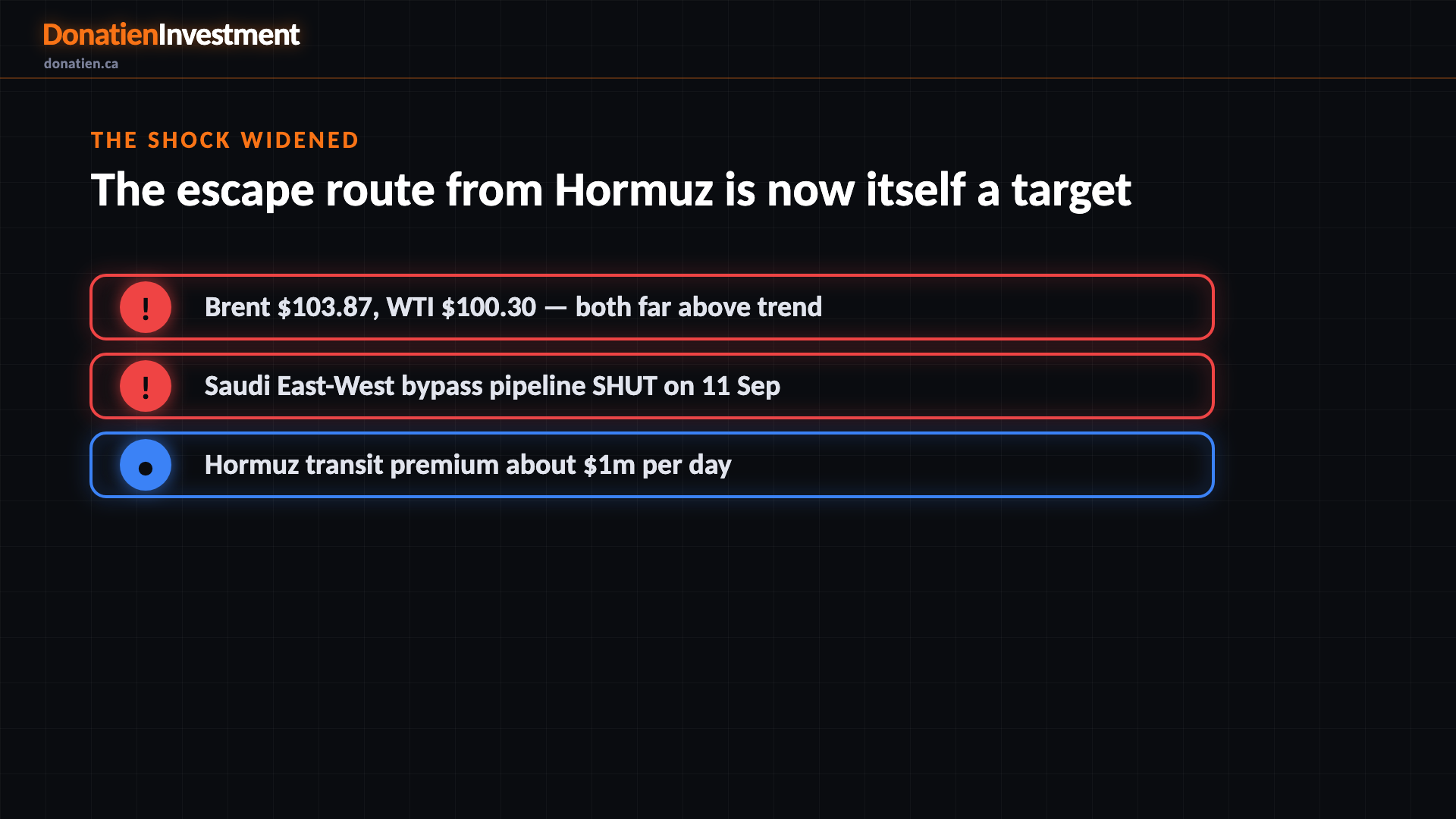
The shock widened
Brent sits at $103.87 and WTI at $100.30. The Strait of Hormuz is effectively closed to normal traffic, and tanker owners willing to cross it charge about $1 million a day. The more important development is less widely noticed: on 11 September Saudi Arabia shut the East–West pipeline after drone strikes launched from Iraqi territory. That pipeline carries roughly 5 million barrels a day around the Strait to the Red Sea. It was the main workaround — and a workaround that is itself under attack does not relieve a war premium on any schedule.
Where that leaves positioning
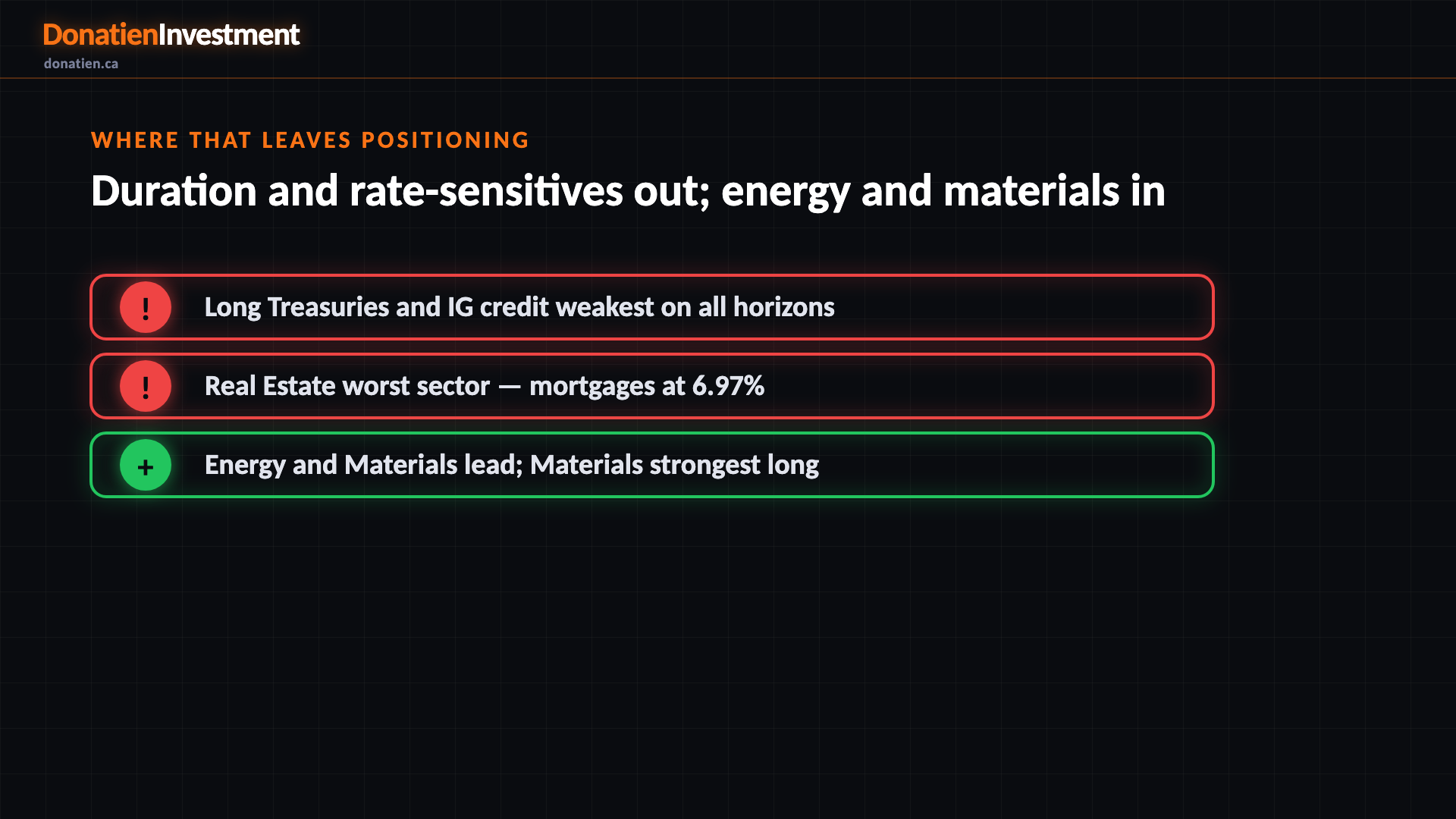
The strongest signal in the report is negative, and it is in bonds. Long Treasuries score worst on every horizon, with the 10-year touching 5.01% and term premium — the extra yield investors demand simply to hold government debt — rising on its own account. Investment-grade credit is close behind, hit by rates and spreads at once. Real estate is the weakest sector, with mortgages at 6.97%. On the other side, energy and materials lead, and materials carries the only Strong Outperform rating in the report on a long view. The dollar reversed higher to 100.22, which undid a claim the last report made about it.
The risks, and what would prove this wrong
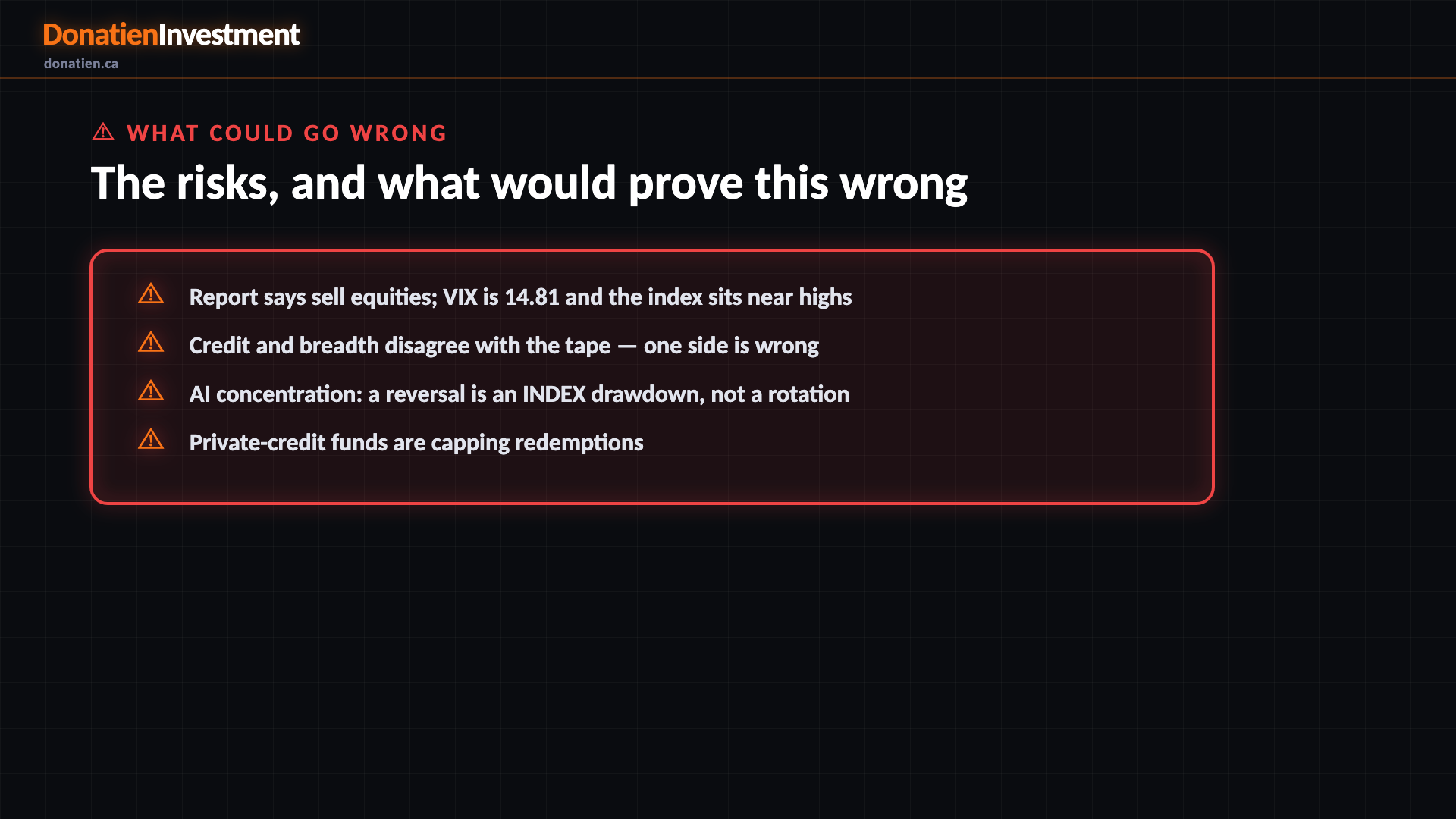
The largest disagreement is inside the report itself. The aggregation marks US equities as underperforming, while the index sits near its highs and the VIX is 14.81. Credit and market breadth support the cautious reading; the price does not. That is flagged rather than resolved, because one side is wrong and pretending otherwise would be dishonest. The second risk is concentration: a handful of AI companies are carrying the index, so a reversal there would be an index-level drawdown rather than a rotation between sectors. And the record — 57 forecasts scored, 53% correct.
The verdict
The call is this: own the things a supply shock and a tightening central bank both reward, and avoid anything whose value is a discounted stream of future cash. Energy and materials lead the sector table; materials carries the only strong outperform rating on a long view, because official-sector gold buying and electrification demand both strengthen from here. Long-dated government bonds are the clearest negative in the report on every horizon, with investment-grade credit and real estate close behind — a 10-year at 5% and a Fed that expects to hike again leave no room for a bond proxy.
The honest caveat is that the report and the market disagree about equities. The aggregation marks American shares as underperforming; the index sits near its highs with volatility under fifteen. Credit and market breadth support the cautious reading, and the price does not. That is flagged rather than resolved, because one side is wrong and pretending to know which would be dishonest.
And the record matters more than the call. Two of the five forecasts in the last report were wrong — the Federal Reserve decision and the state of the consumer — and both were positions taken against the consensus. Fifty-seven forecasts have now been scored, 53% of them correct. That number is published because a forecast nobody keeps score of is not a forecast. Nothing here is a recommendation to buy or sell anything.
Read the full report on donatien.ca →