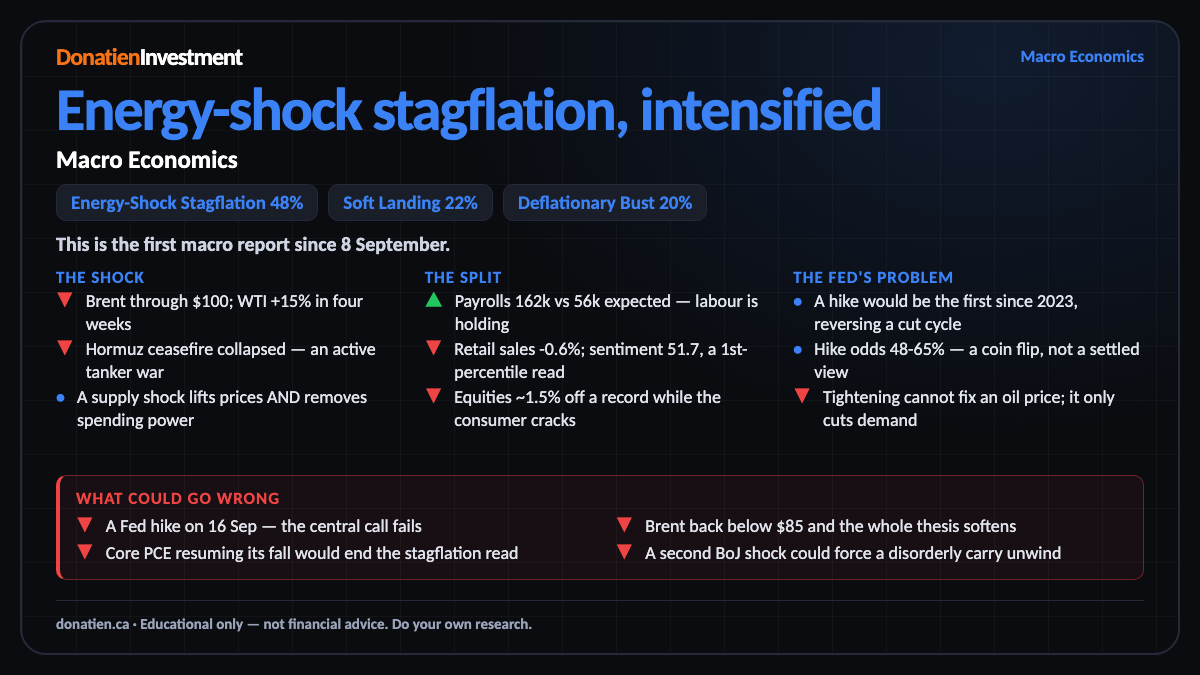
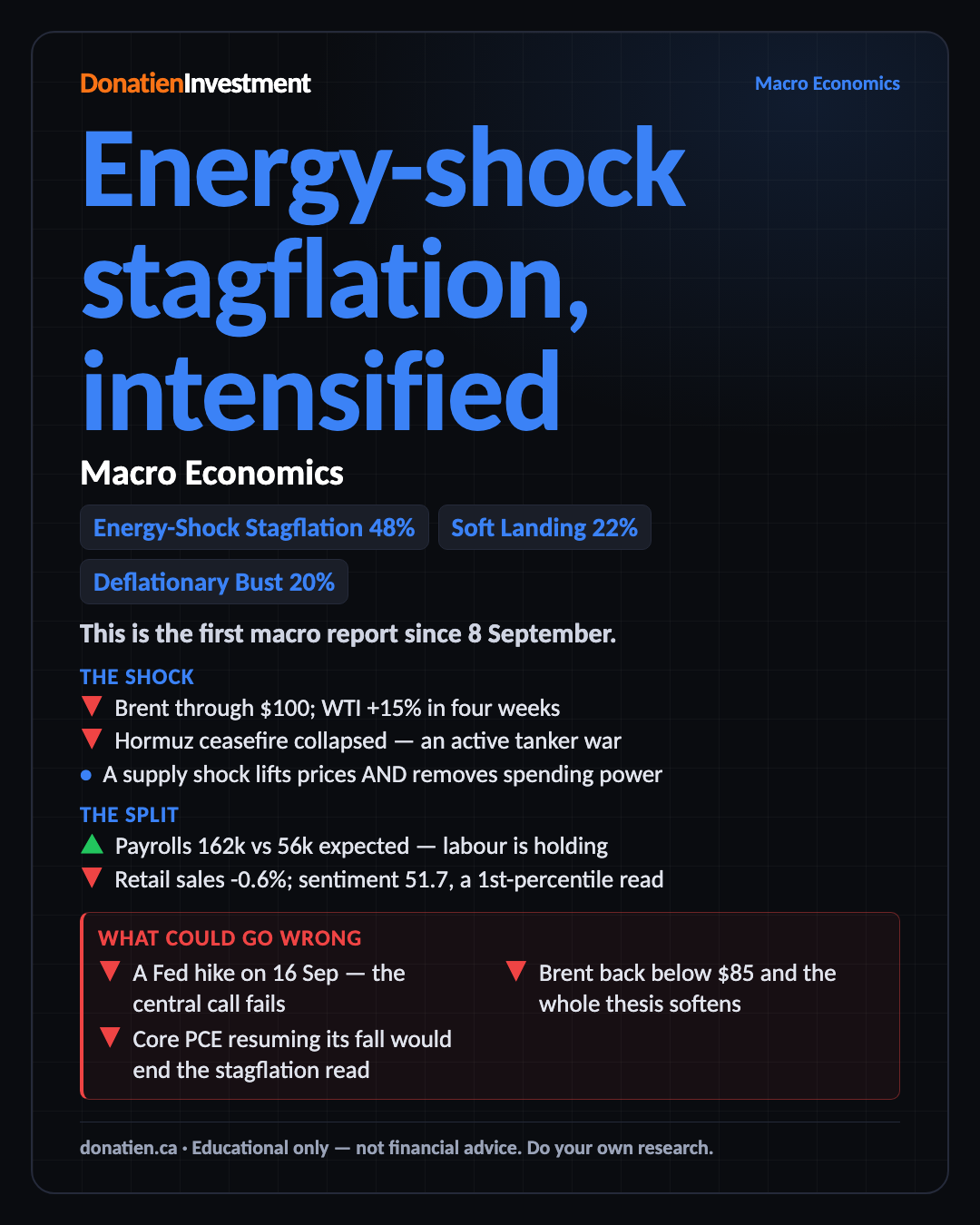
Macro Economics Energy-shock stagflation, intensified
An oil shock the Fed cannot influence, landing on core PCE already stuck at 3.34% and a household that has started to crack.
This is the first macro report since 8 September. Publishing paused for three weeks, so this read covers four weeks of movement rather than the usual two — and a lot moved. The regime call has not flipped: the last report already led with energy-shock stagflation. What changed is that the shock intensified and the Federal Reserve's problem got harder.
The shock
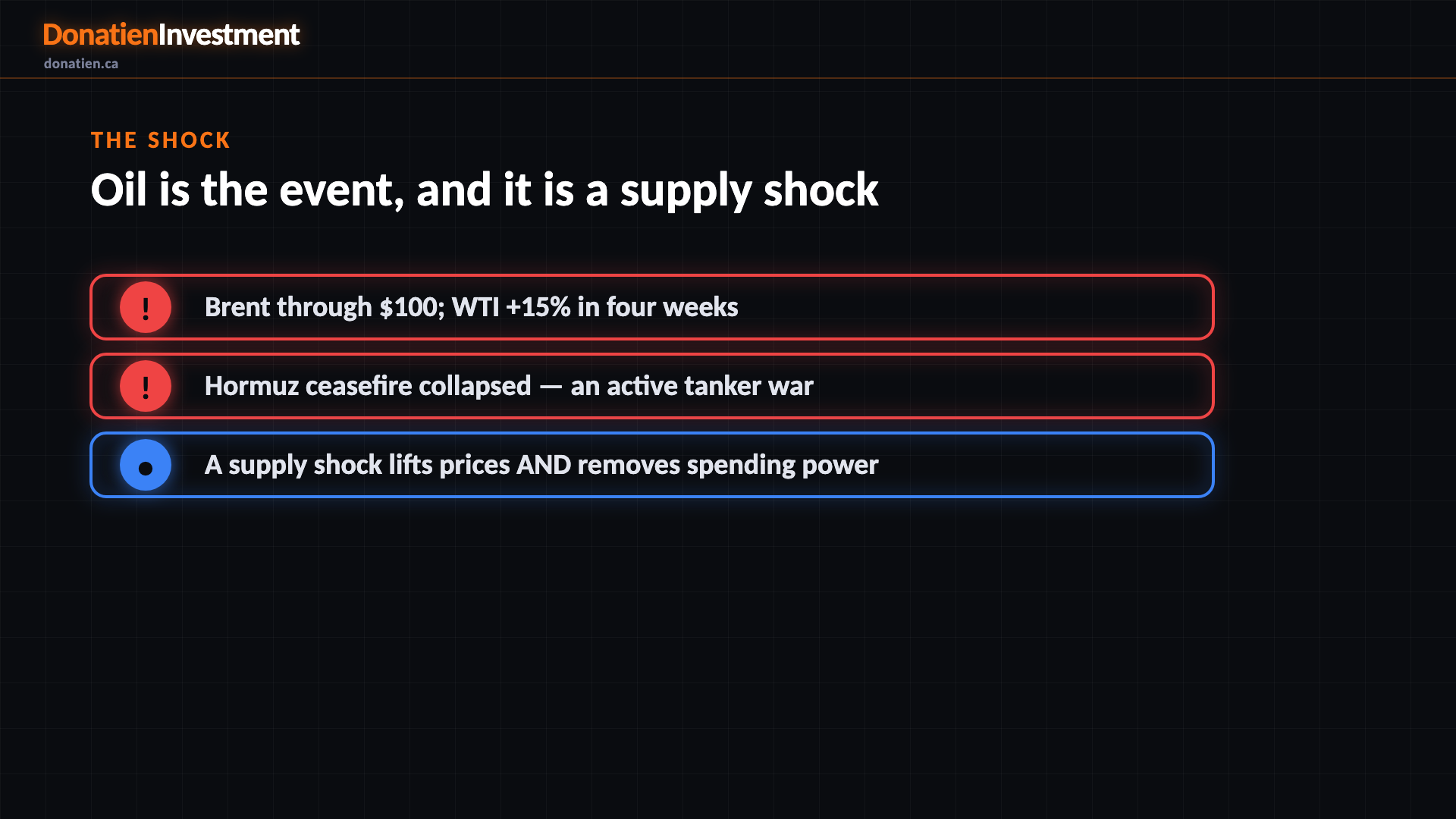
Brent went through one hundred dollars and West Texas rose fifteen per cent in four weeks. This is not demand — it is the Strait of Hormuz. The ceasefire that held earlier this year has collapsed into an active tanker war, and shipping through the strait has slowed. A supply shock matters differently from a demand boom, because it lifts prices while it removes spending power at the same time. That is the whole difficulty of the current moment, and it is why energy leads every sector table in this report while the consumer sectors sit at the bottom of it.
The split
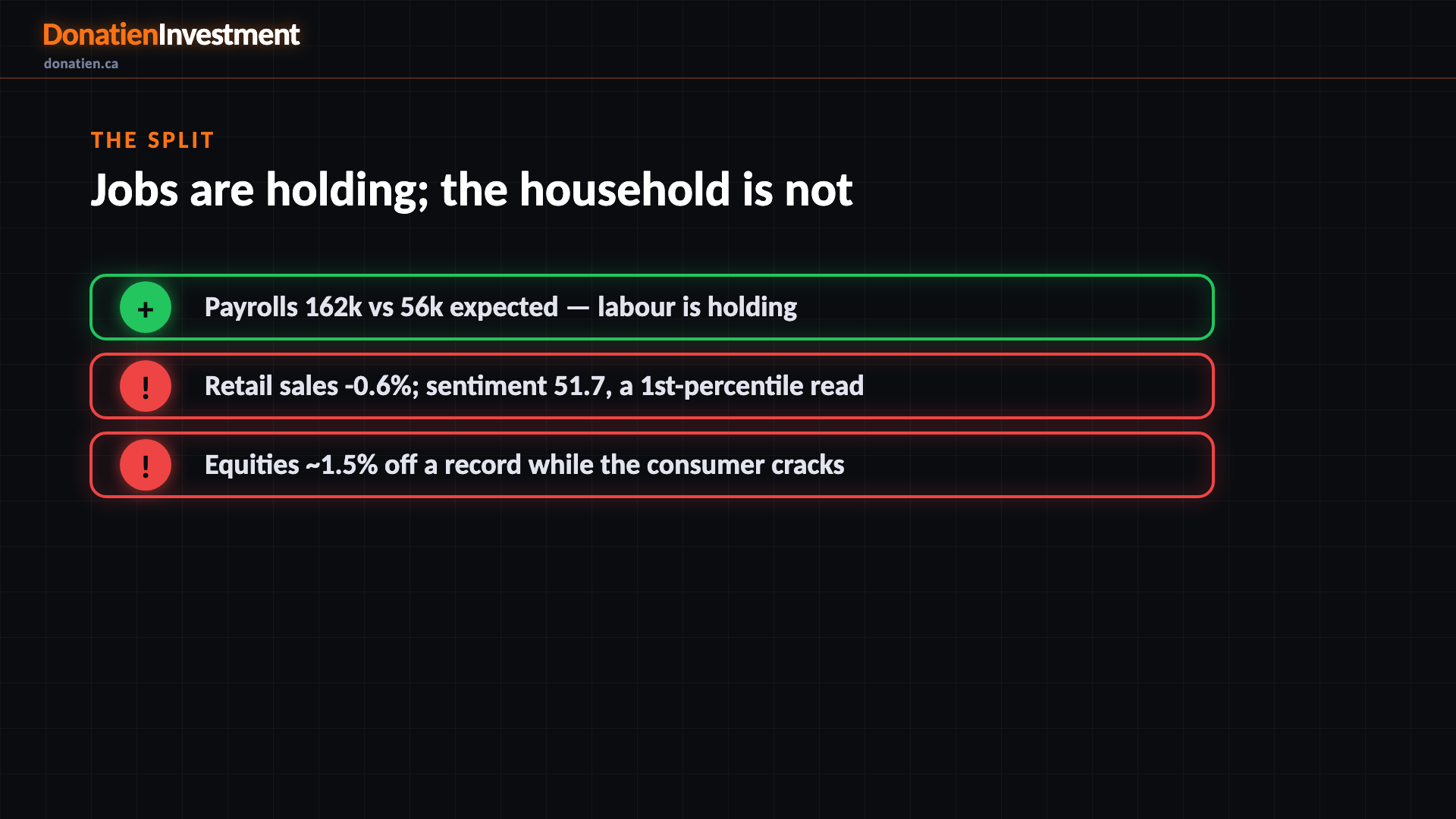
The American data is telling two different stories at once. Payrolls came in at a hundred and sixty-two thousand against fifty-six thousand expected, and the previous month was revised up. On that evidence the economy is fine. But retail sales fell six tenths of a per cent, and consumer sentiment printed fifty-one point seven — below the first percentile of its own history, which is to say worse than almost any month ever recorded. Jobs are holding. The household is not. Petrol is taking the marginal dollar, and equities sit about one and a half per cent below a record high while that happens.
The Fed's problem
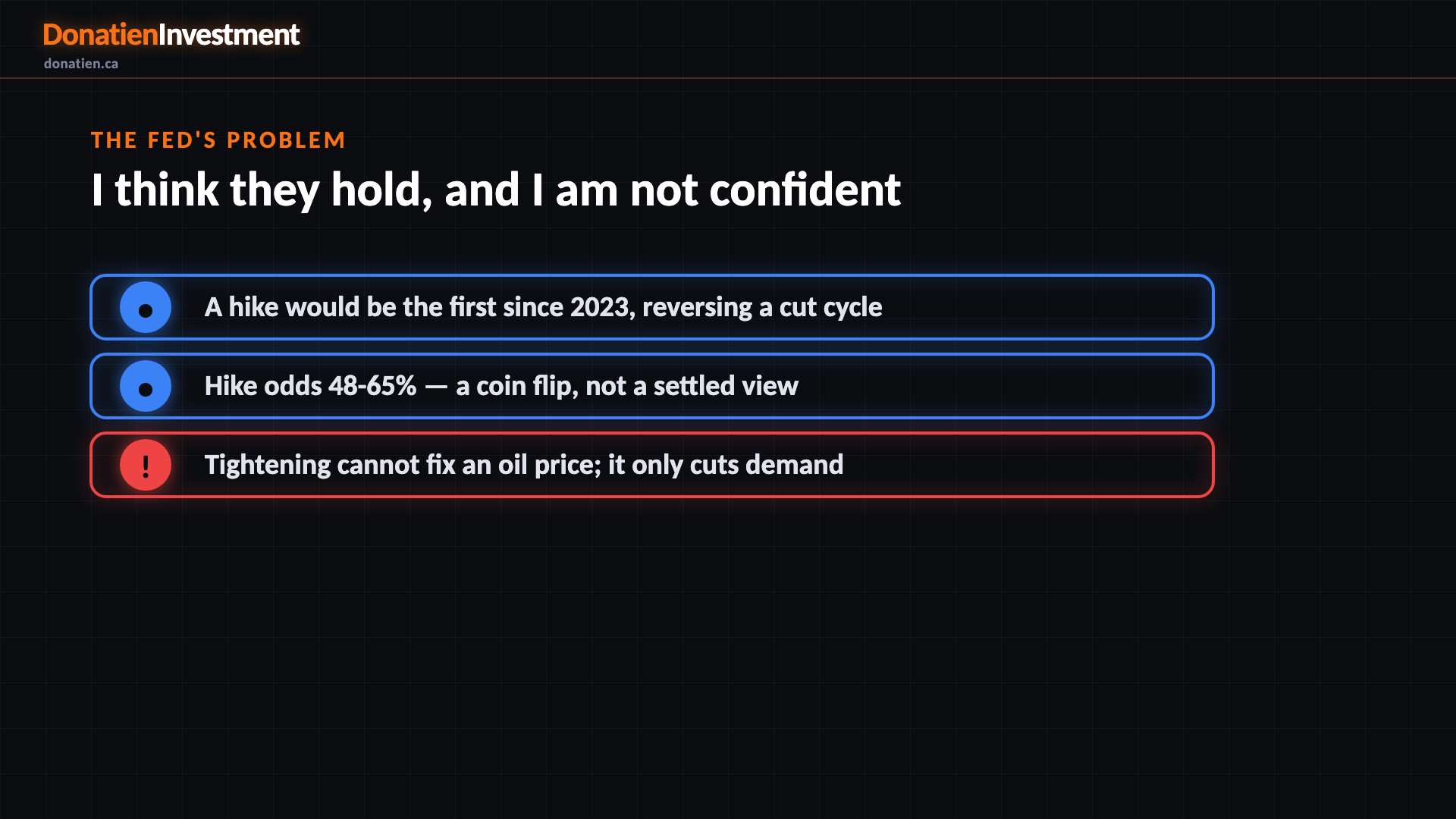
The last Federal Reserve move was a cut, in December twenty twenty-five. A hike on the sixteenth would be the first since twenty twenty-three and a reversal of that cutting cycle. July's meeting held nine to three, with three officials voting for a rise. Markets put the odds somewhere between forty-eight and sixty-five per cent depending where you look — a coin flip. My call is that they hold, and I am publishing it at low confidence, because tightening into an oil shock buys nothing on the oil price and costs you demand. If they hike, this report's central judgement is wrong, and the next one will say so.
What I got wrong
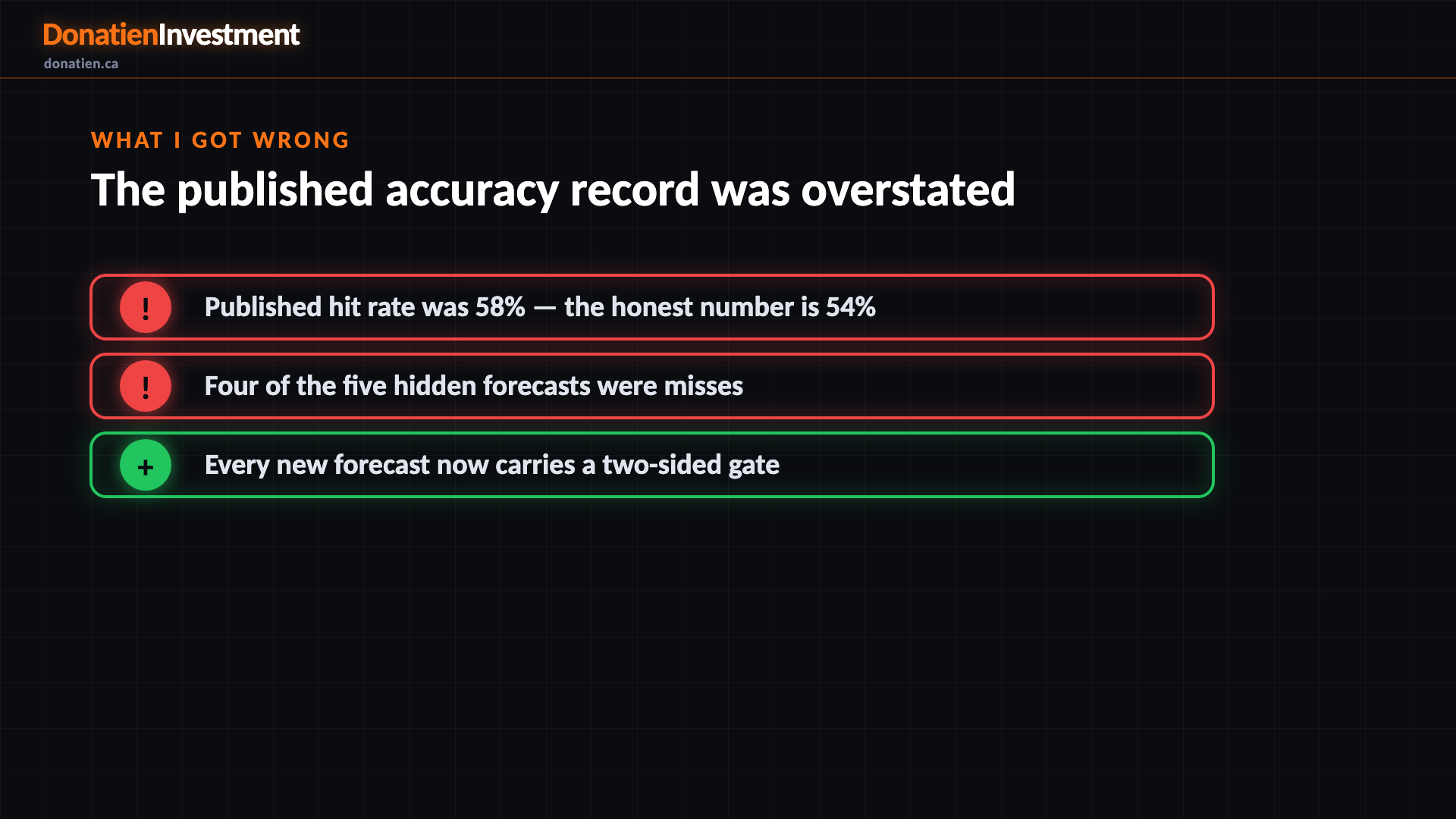
One correction that has nothing to do with the economy. The forecast ledger on the site was keeping scored predictions in two separate lists, and only one of them fed the published hit rate. Five forecasts sat outside the number — four of which were misses. Merged properly, the record is fifty-four per cent, not the fifty-eight per cent shown before. There is a subtler problem underneath it: three of this run's five correct calls passed against a threshold looser than the forecast actually stated. Every forecast from now on carries a two-sided gate, so it can be marked wrong as easily as right.
What would prove this wrong
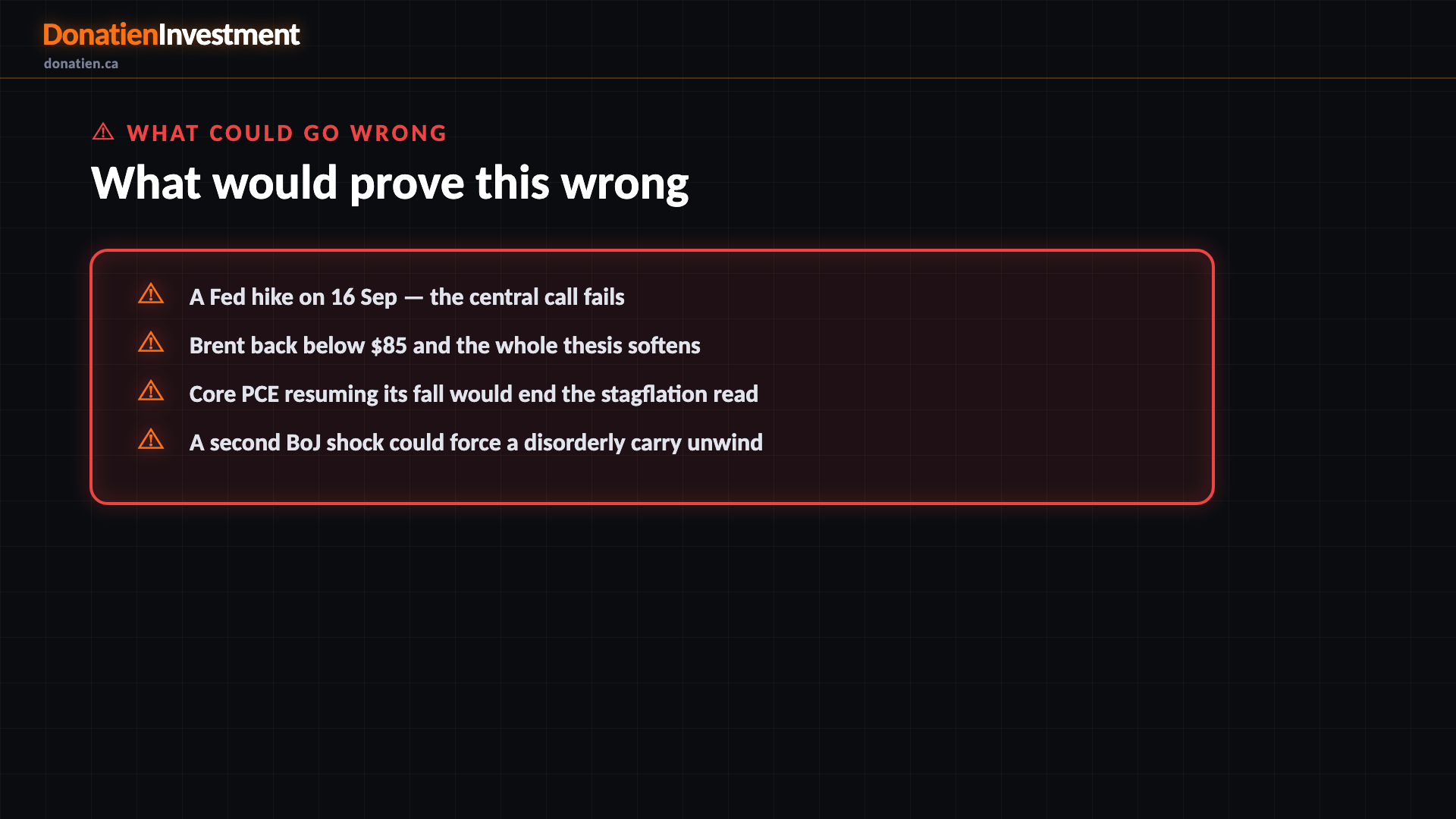
A Fed hike on 16 Sep — the central call fails. Brent back below $85 and the whole thesis softens. Core PCE resuming its fall would end the stagflation read. A second BoJ shock could force a disorderly carry unwind.
The verdict
An oil shock the Fed cannot influence, landing on core PCE already stuck at 3.34% and a household that has started to crack.
Read the full report on donatien.ca →