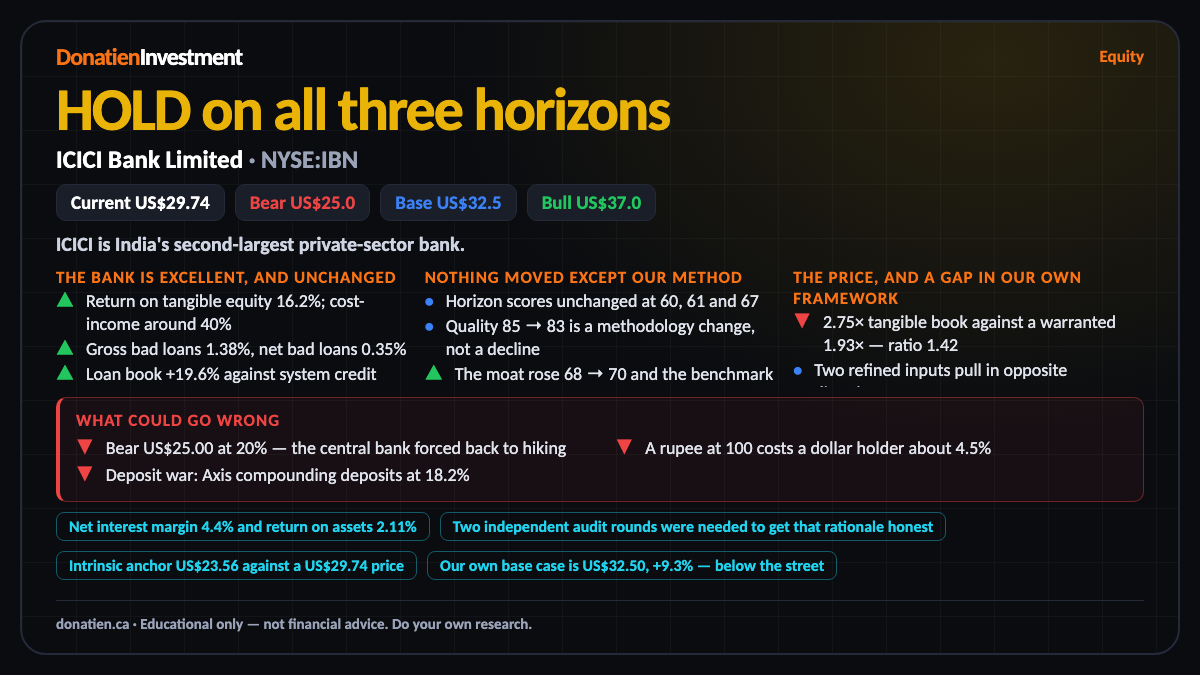
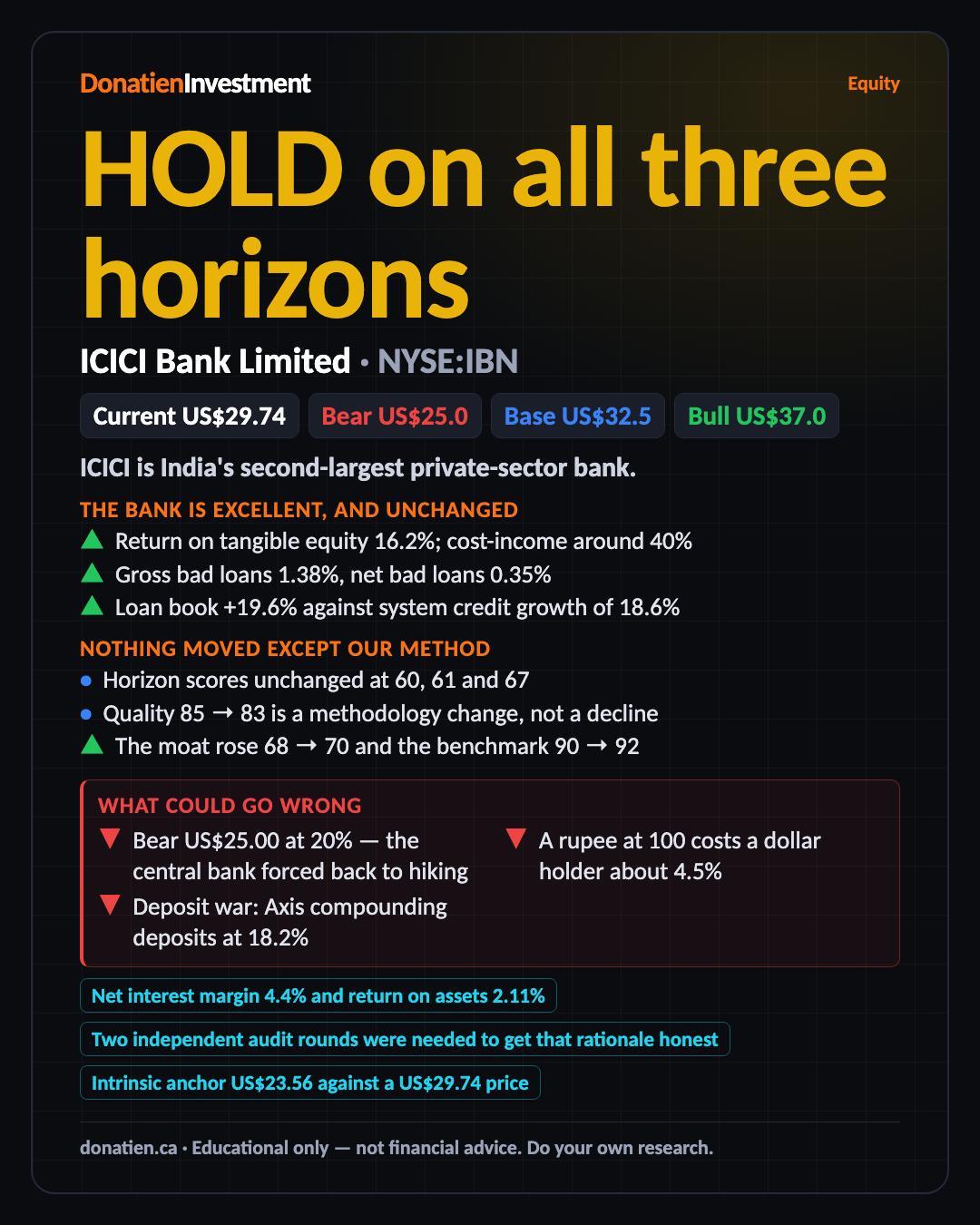
ICICI Bank Limited (NYSE:IBN) HOLD on all three horizons
Price to tangible book of 2.75× against a warranted 1.93× is a ratio of 1.42, inside the Expensive band, and the Valuation Ceiling gate caps every horizon.
ICICI is India's second-largest private-sector bank. The US listing is an ADR — one share here is two ordinary shares in Mumbai, so the rupee sits between you and the business.
The bank is excellent, and unchanged
Start with the business, because none of the argument is with it. Return on tangible equity is sixteen point two percent and the cost-to-income ratio around forty — the best combination among India's large private banks. Net interest margin is four point four percent and return on assets two point one one. Asset quality is close to as clean as a bank's gets: gross bad loans one point three eight percent, net bad loans nought point three five. And it is still taking share, growing its loan book nineteen point six percent against system credit growth of eighteen point six. The Indian credit cycle firmed this cycle too — the central bank held rates and raised its growth forecast to six point seven percent.
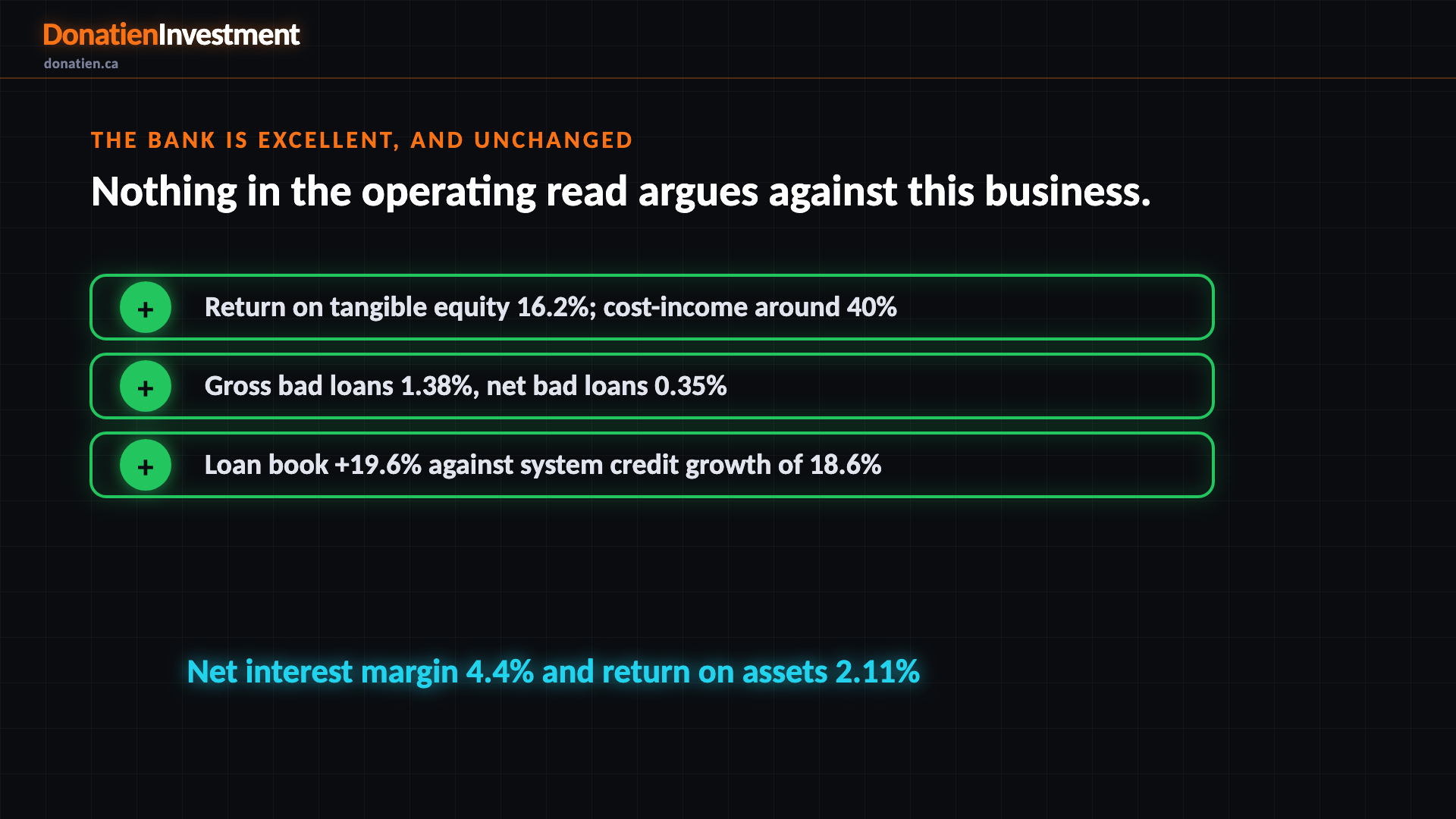
Net interest margin 4.4% and return on assets 2.11%
Nothing moved except our method
Three weeks on, nothing has crossed a boundary. The horizon scores are literally unchanged at sixty, sixty-one and sixty-seven. What changed is the quality of the evidence underneath them. Business quality reads eighty-three against eighty-five, and that is a methodology change rather than a deterioration — the moat score actually rose from sixty-eight to seventy and the industry benchmark from ninety to ninety-two. The fall comes from this run applying an explicit weighted build where the previous report scored the pillar holistically. It took two rounds of independent audit to get that explanation straight: the first rewrite still named causes that had moved in the opposite direction.
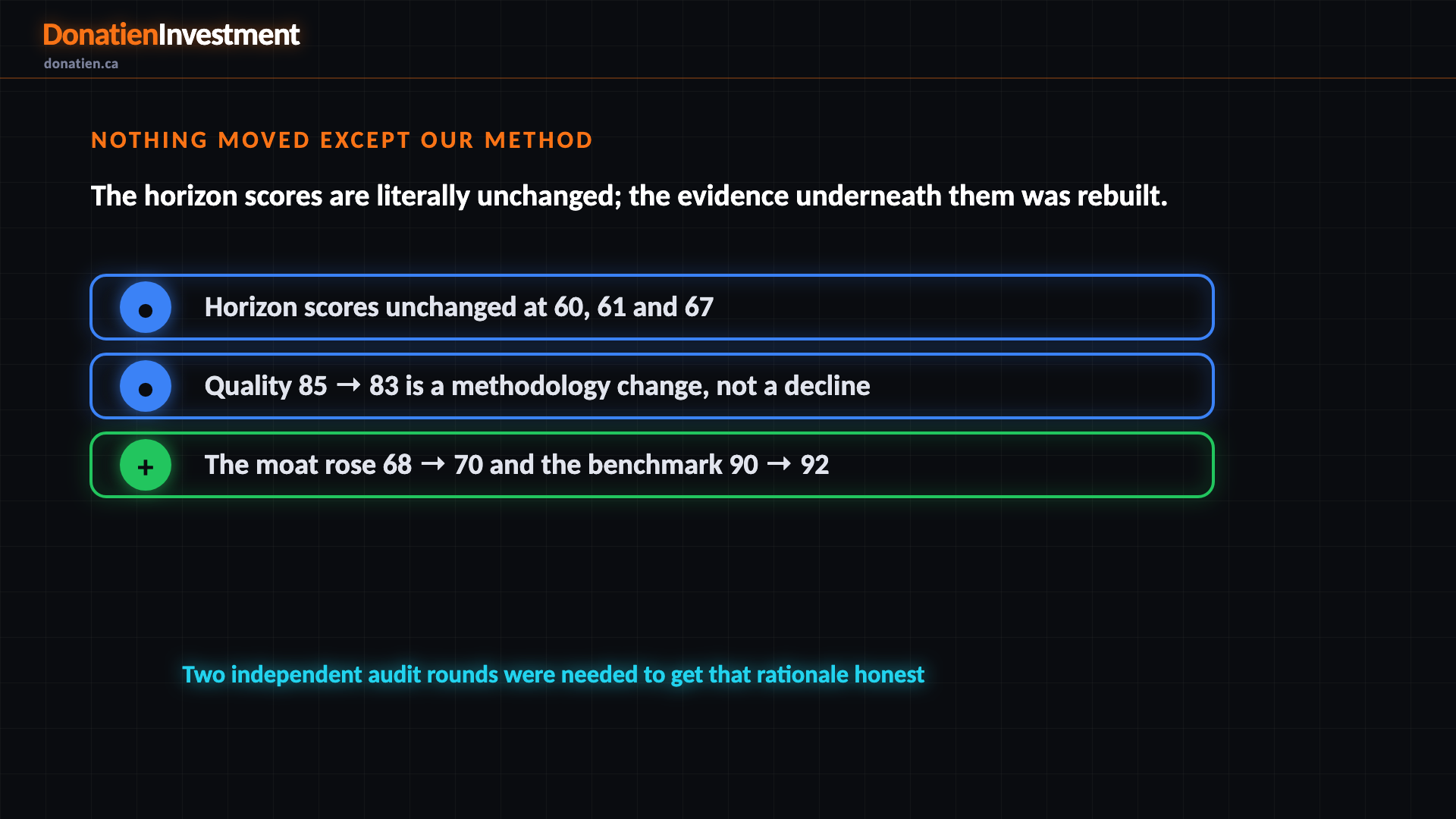
Two independent audit rounds were needed to get that rationale honest
The price, and a gap in our own framework
The valuation anchor was rebuilt this run on a stricter basis, and the listed subsidiary stakes were priced from the market rather than from a ballpark. Two inputs were refined and they pull in opposite directions — the equity risk premium moved down, which raises the warranted multiple, while the return on tangible equity was re-derived slightly lower, which lowers it. Net, the warranted ratio improves from one point four seven to one point four two. Closer to the line, still the wrong side of it. And one gap in our own framework, disclosed: our rules cap terminal growth at three percent, a figure calibrated to dollar economies, while this anchor is built in rupees. We used six percent instead. On the literal three, the ratio would read one point seven two — more expensive, not less.
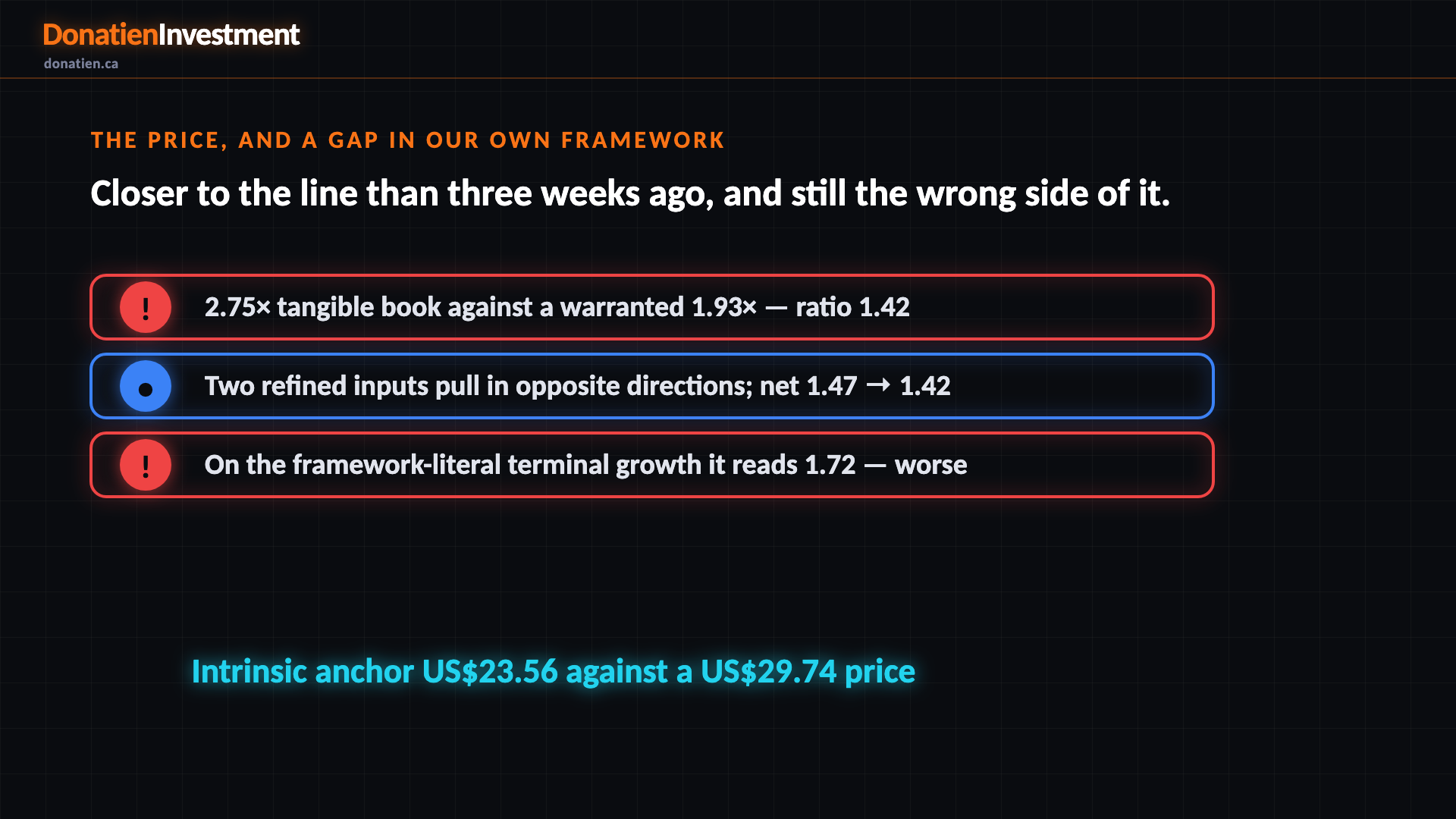
Intrinsic anchor US$23.56 against a US$29.74 price
Forty-one analysts, no sells
Forty-one analysts cover the local line and every one of them is bullish, with a mean target of thirty-six thirty-four, twenty-two percent above the price. This framework says hold, and the disagreement is worth stating rather than smoothing. It is not a disagreement about the bank; it is about what a warranted multiple is for. Our own base case, thirty-two fifty, does not assume any reversion to the intrinsic anchor — it assumes the market keeps paying a large premium while the book compounds underneath it, which is what has happened for three years. The gap between that assumption and the anchor is the valuation risk, and it is why this is a hold rather than a buy. No entry path is open.
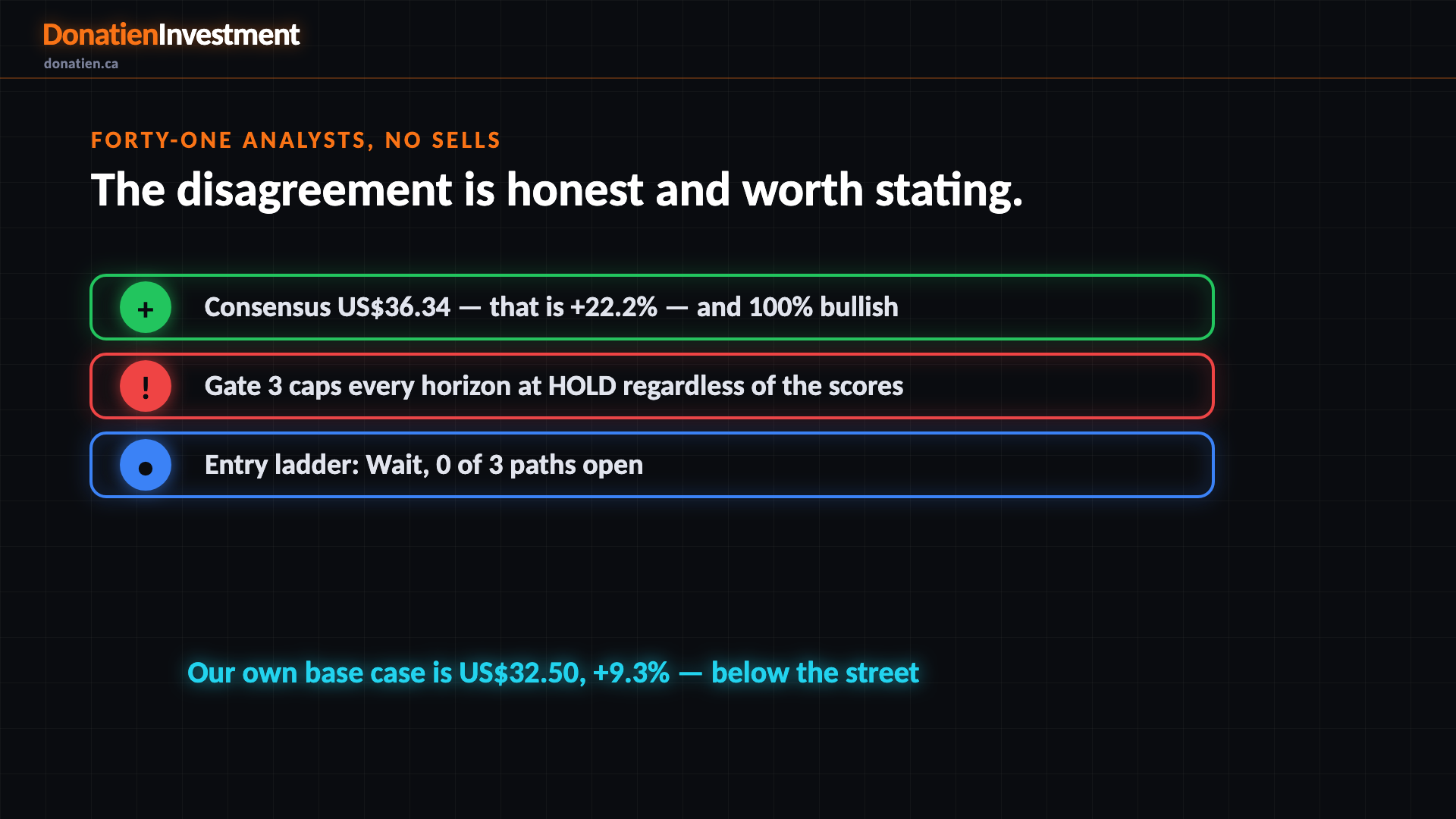
Our own base case is US$32.50, +9.3% — below the street
What could go wrong
The bear comes off the central bank's own list. Its August statement flagged elevated food and fuel inflation, manufacturing cost pressure, tariff risk and an uncertain monsoon — though the same statement cut the inflation forecast, which is evidence against this branch and part of why it carries only a twenty percent weight. If oil stays near eighty-three dollars in an economy importing about eighty-five percent of its crude, the central bank is forced back toward hiking, credit growth falls below twelve percent and the rupee slides toward a hundred. Alongside it, the deposit war: Axis is compounding deposits at eighteen point two percent against a system credit-to-deposit ratio of eighty-two, which forces this bank to pay up for funding and compresses the margin. And the currency is a standing risk for a dollar holder — a rupee at a hundred costs about four and a half percent before the shares move at all.
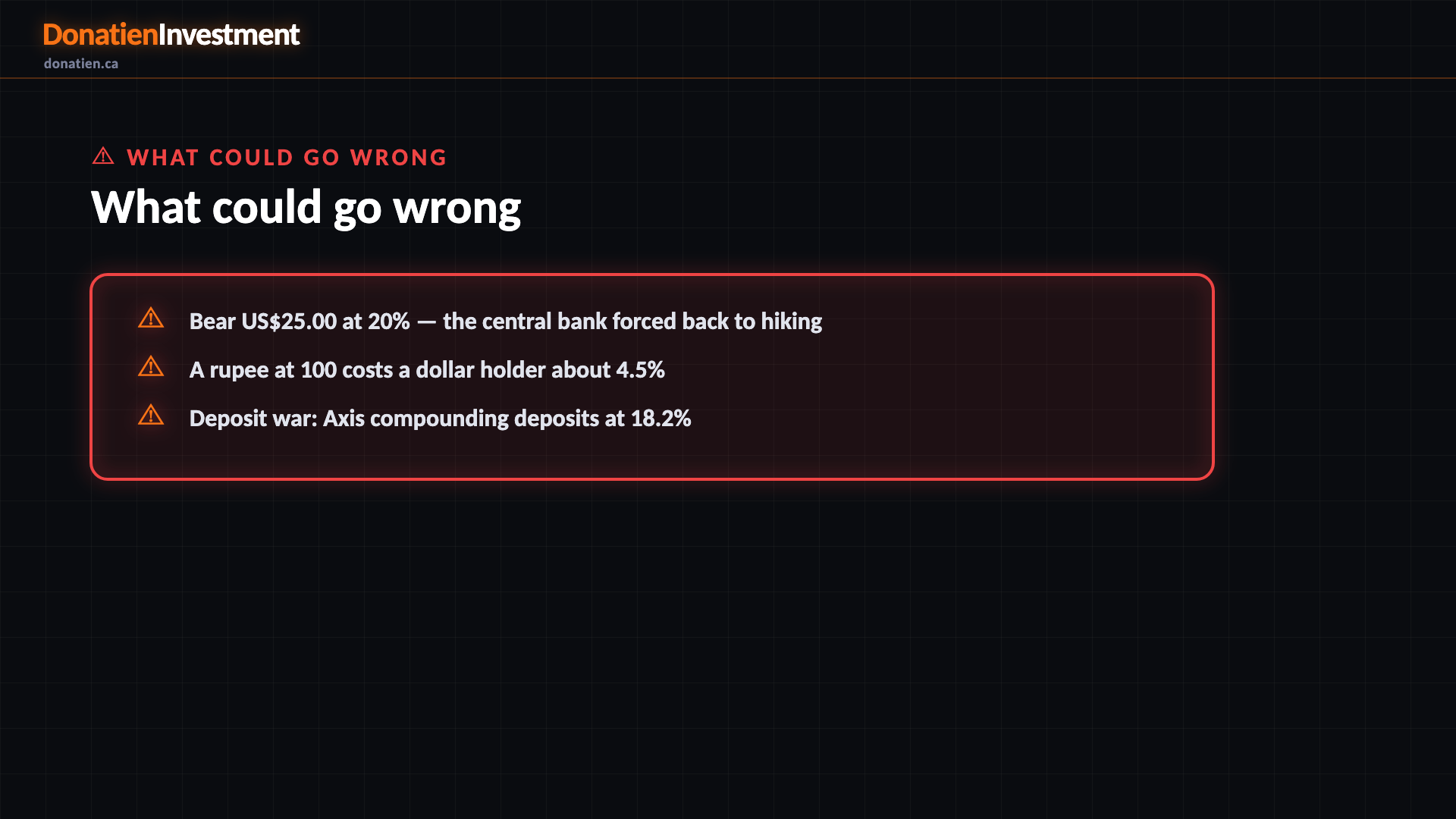
Risk vs Reward
Bull thirty-seven dollars at twenty-five percent, and note what it requires: the multiple going further above the warranted level rather than back toward it. That is a re-rating bet, not a valuation bet. Base thirty-two fifty at fifty-five percent, plus nine point three percent, with tangible book compounding about fourteen percent while the multiple de-rates only mildly. Bear twenty-five dollars at twenty percent, on the central bank forced hawkish and the multiple falling back toward warranted, with a currency hit on top. The probability-weighted value is thirty-two twelve.
The verdict
Hold, on all three horizons, unchanged — an excellent bank at a full price, with the valuation-ceiling gate still live. Nothing crossed a boundary this cycle. What we did was rebuild the evidence: an explicit quality build in place of a holistic score, a stricter valuation anchor, subsidiary stakes priced from the market rather than estimated, and a disclosed gap in our own rules about how terminal growth should be set for a foreign-currency issuer. The one thing worth remembering is which way that judgement cuts — on our framework's literal rule this stock is more expensive, not less. The next report is due the thirty-first of August.
It is a quantitative framework for educational purposes only, and it is not financial advice. Always do your own research.
Read the full report on donatien.ca →