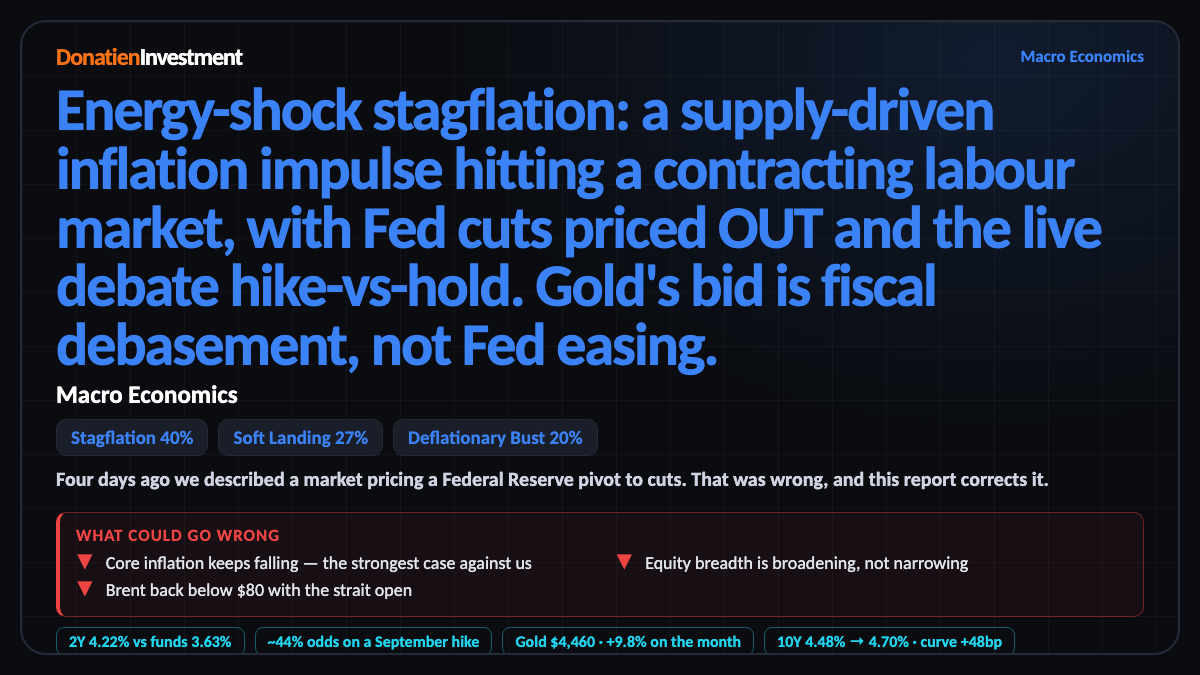
Macro Economics Fed cuts are priced OUT — the live debate is hike-vs-hold
The 2Y yields 4.22% against a 3.63% funds rate. Gold is up 9.8% while the 10Y sells off — that is fiscal debasement, not Fed easing.
Four days ago we described a market pricing a Federal Reserve pivot to cuts. That was wrong, and this report corrects it. The two-year note yields 4.22% against an effective funds rate of 3.63% — 59 basis points above it. Cuts are not being priced in. They are being priced out.
The correction
Last week we said the market was pricing a Fed pivot to cuts, and we said the tape backed it up. Re-checking that, it does not. Our framework has a specific test for a dovish call: the front end of the curve has to fall toward or below the funds rate. It has not. The two-year note yields four point two two percent against an effective funds rate of three point six three — fifty-nine basis points above it, and range-bound there all month. Meanwhile three FOMC members dissented in July because they wanted to raise rates, JPMorgan moved to a hike call, and futures put roughly forty-four percent odds on a September hike. Cuts are not coming. The live debate is whether they hike or hold.
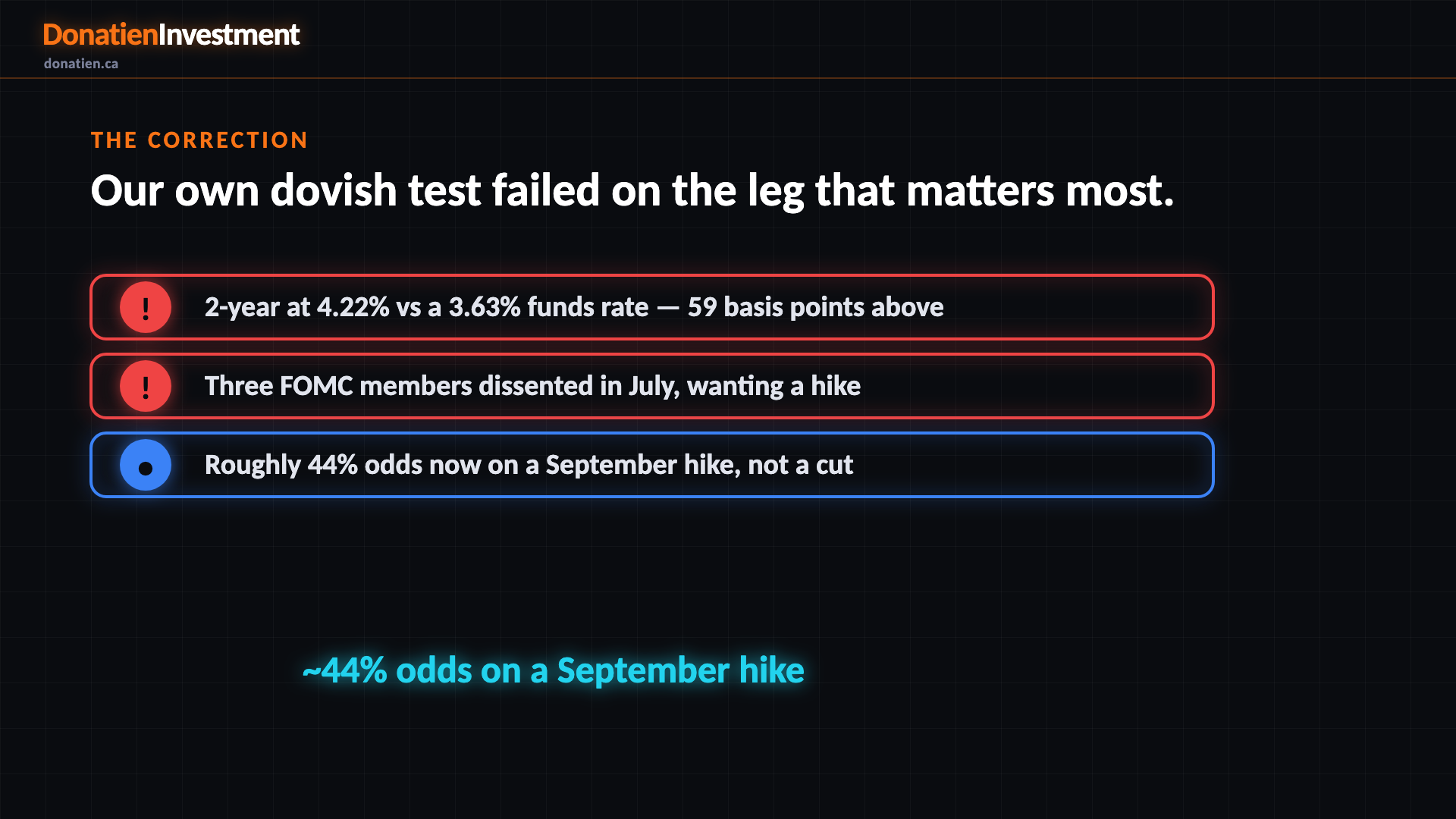
2Y 4.22% vs funds 3.63% · ~44% odds on a September hike
Why gold is rising
Here is the part that matters for how you own gold. Gold is up nearly ten percent on the month — but it is rising at the same time as the ten-year Treasury sells off, from four point four eight percent to four point seven zero, with the curve steepening by forty-eight basis points. A rate-cut rally comes with a falling long end. This one does not. So the bid is not easing. It is fiscal debasement: July's budget deficit came in at four hundred and thirty-two billion dollars against three hundred and forty-eight expected, and Treasury auctions are clearing at progressively higher yields. That distinction is practical, not academic. If you own gold as a bet on rate cuts, you sell it when hike odds rise. If you own it because the fiscal arithmetic is deteriorating, the drawdowns are something you buy.
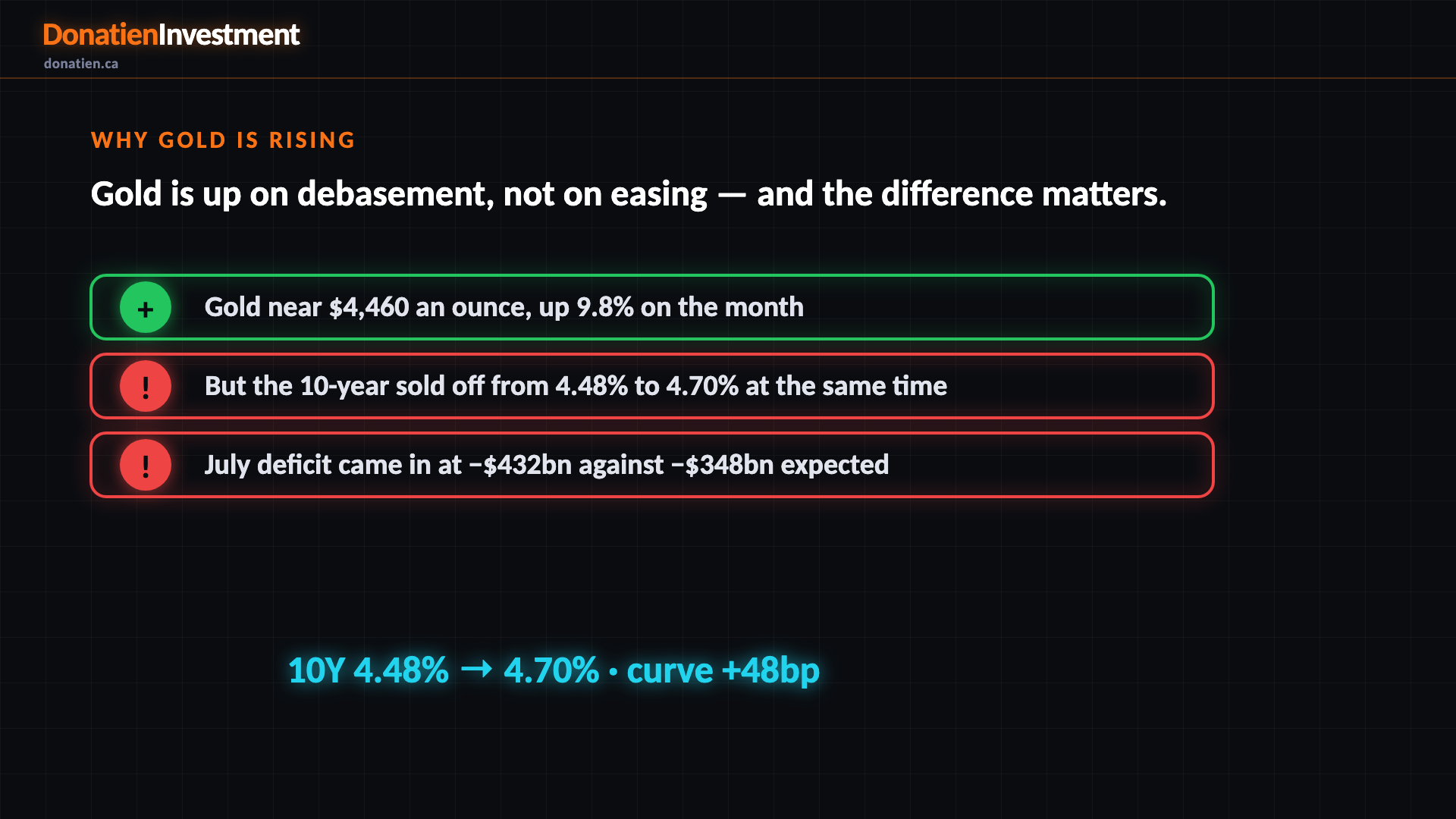
Gold $4,460 · +9.8% on the month · 10Y 4.48% → 4.70% · curve +48bp
The squeeze
Two forces are colliding. On one side, an energy shock: Brent crude is up eleven and a half percent in a single week to eighty-eight dollars fifty-eight, driven by the Strait of Hormuz, not by demand. On the other, a labour market that has stopped adding jobs — July payrolls fell by twenty-three thousand, and the prior two months were revised down by a further hundred and three thousand. Inflation up, growth down, and a central bank that cannot cut into it. That is why stagflation moves from thirty-four to forty percent. But we will give you the strongest argument against our own call, because you should have it: core inflation is genuinely falling, from two point six to two point five percent. If that continues, we are wrong.
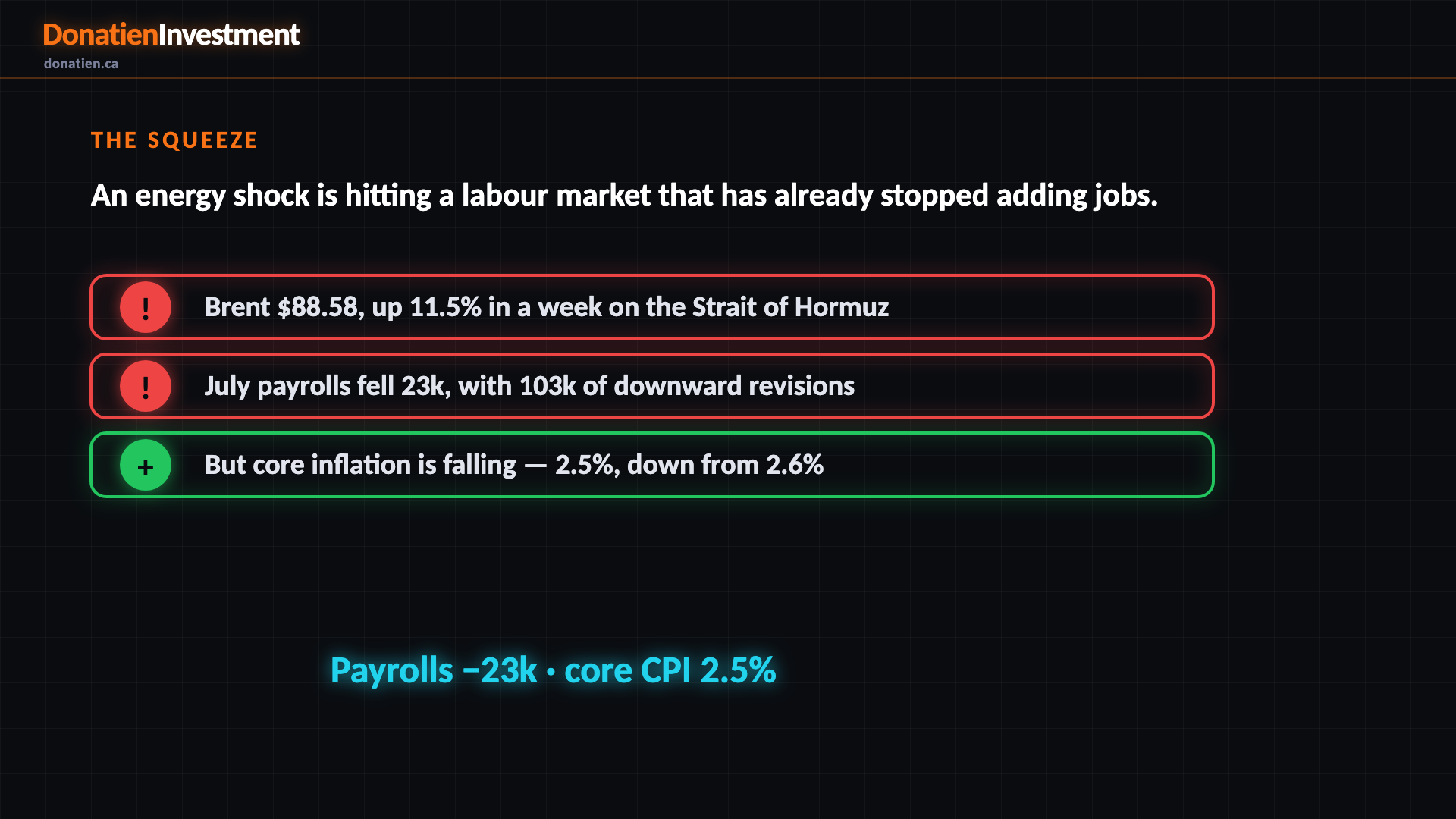
Brent $88.58 · +11.5% in a week · Payrolls −23k · core CPI 2.5%
What we got wrong
Every one of these reports goes past a separate fact-checking agent that did not write it and is told to assume it contains errors. This one came back as a fail. We had the old Section 122 tariff at fifteen percent when it was ten — which inverted our own reasoning for downgrading the tariff driver. And we described high-yield credit as sitting above its moving averages when, on unadjusted prices, it is below them. That second one actually strengthens our argument, and we have said so rather than quietly banking it. All of it is published in the report, because a report that only ever shows you its conclusions is not one you can calibrate against.
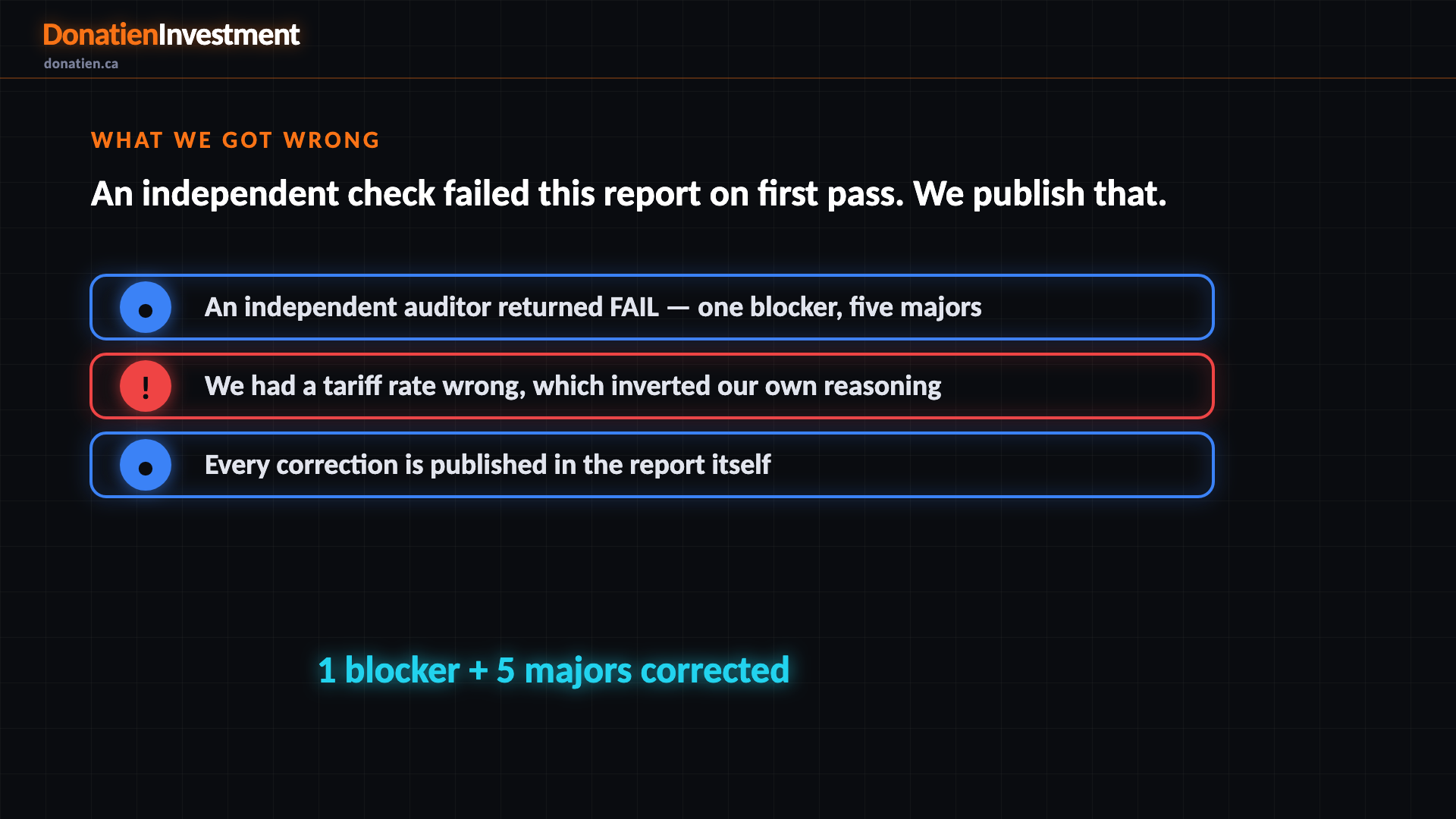
Independent audit: FAIL on first pass · 1 blocker + 5 majors corrected
What could go wrong
Three things would tell you we have this wrong. Core inflation continuing to fall is the big one — it is already at two point five percent and heading the right way. Second, market breadth is broadening rather than narrowing: the equal-weight index is beating the cap-weighted one, which is the opposite of what you see before a concentration-driven drawdown. Third, if Brent falls back below eighty dollars with the strait open, the inflation impulse we are worried about simply goes away.
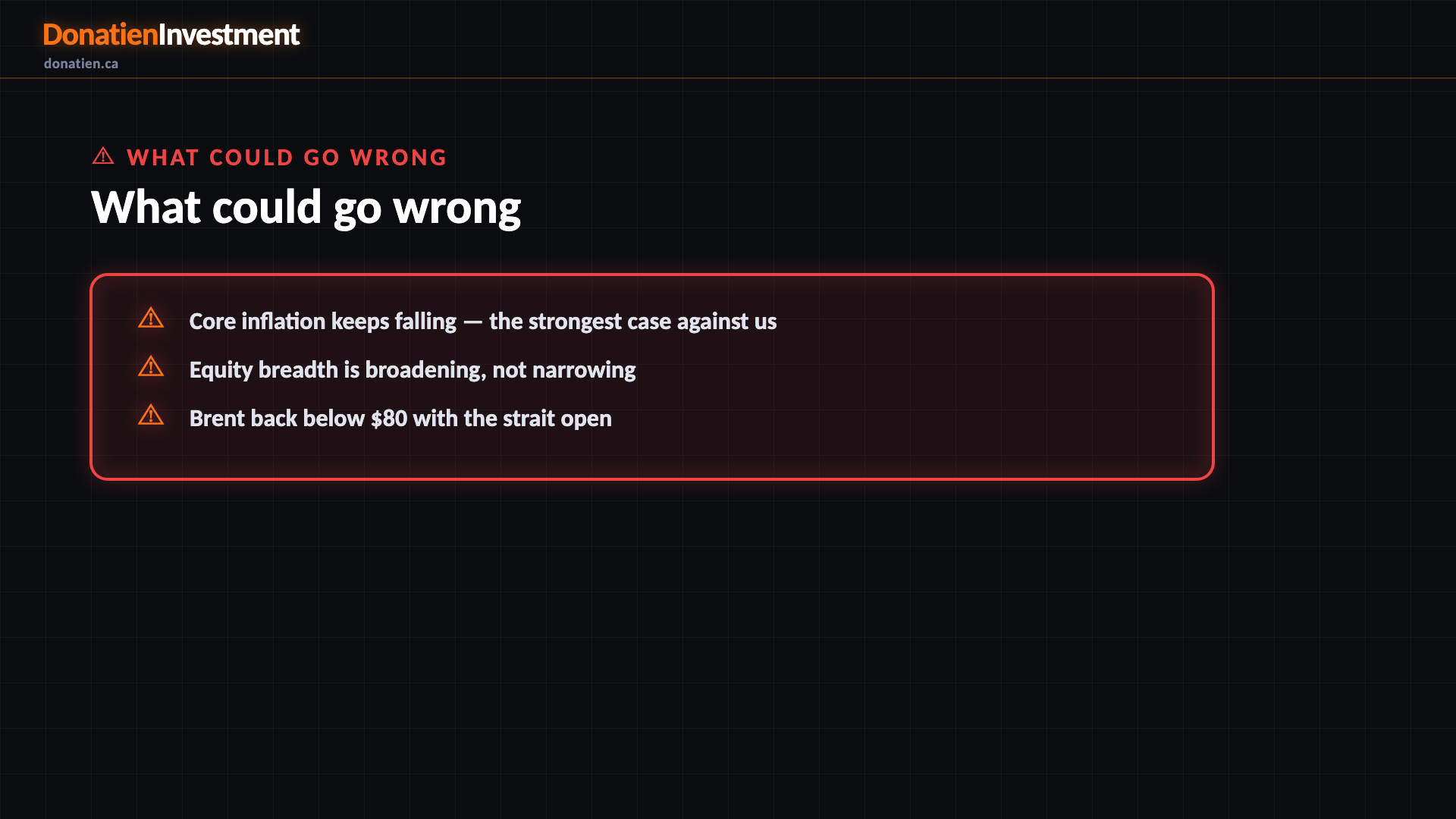
Risk vs Reward
Stagflation at forty percent, a soft landing at twenty-seven, a deflationary bust at twenty, and a reacceleration at thirteen. Note that stagflation was already the leader at thirty-four — we widened an existing lead on corroborating evidence, we did not flip one on a single data release.
The verdict
Own the debasement trade — gold, silver, materials, TIPS — and understand you are owning it for fiscal reasons, not for Fed reasons. Be careful in consumer discretionary, utilities and real estate, which are all being squeezed by a rising term premium. And treat our high-yield call as the genuinely contrarian one it is: nothing is dislocating today, and we could be early or simply wrong.
The next report lands on the twentieth of August, the day after the Federal Reserve publishes the minutes of its July meeting. Those minutes are the single best test of everything in this report. As always, this is not financial advice — it is how we are reading the economy, published so you can check our work.
Read the full report on donatien.ca →