Synchrony Financial (NYSE:SYF) BUY
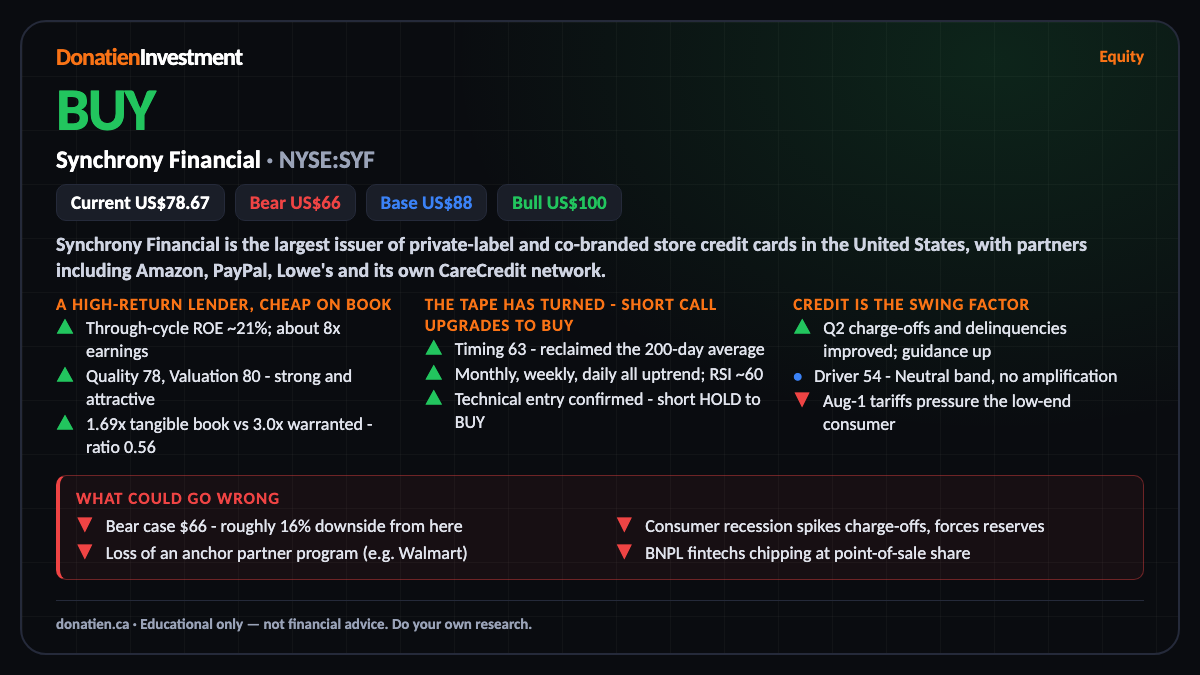
Synchrony is a high-return consumer-credit franchise trading at 1.69 times tangible book, and after a 9.6% rally it has reclaimed its 200-day moving average. That flips the timing pillar from bearish to strongly bullish and upgrades the short-term call from HOLD to BUY, joining the medium and long BUYs. The technical entry is now confirmed, at Full-Size conviction. The catch is the consumer-credit cycle.
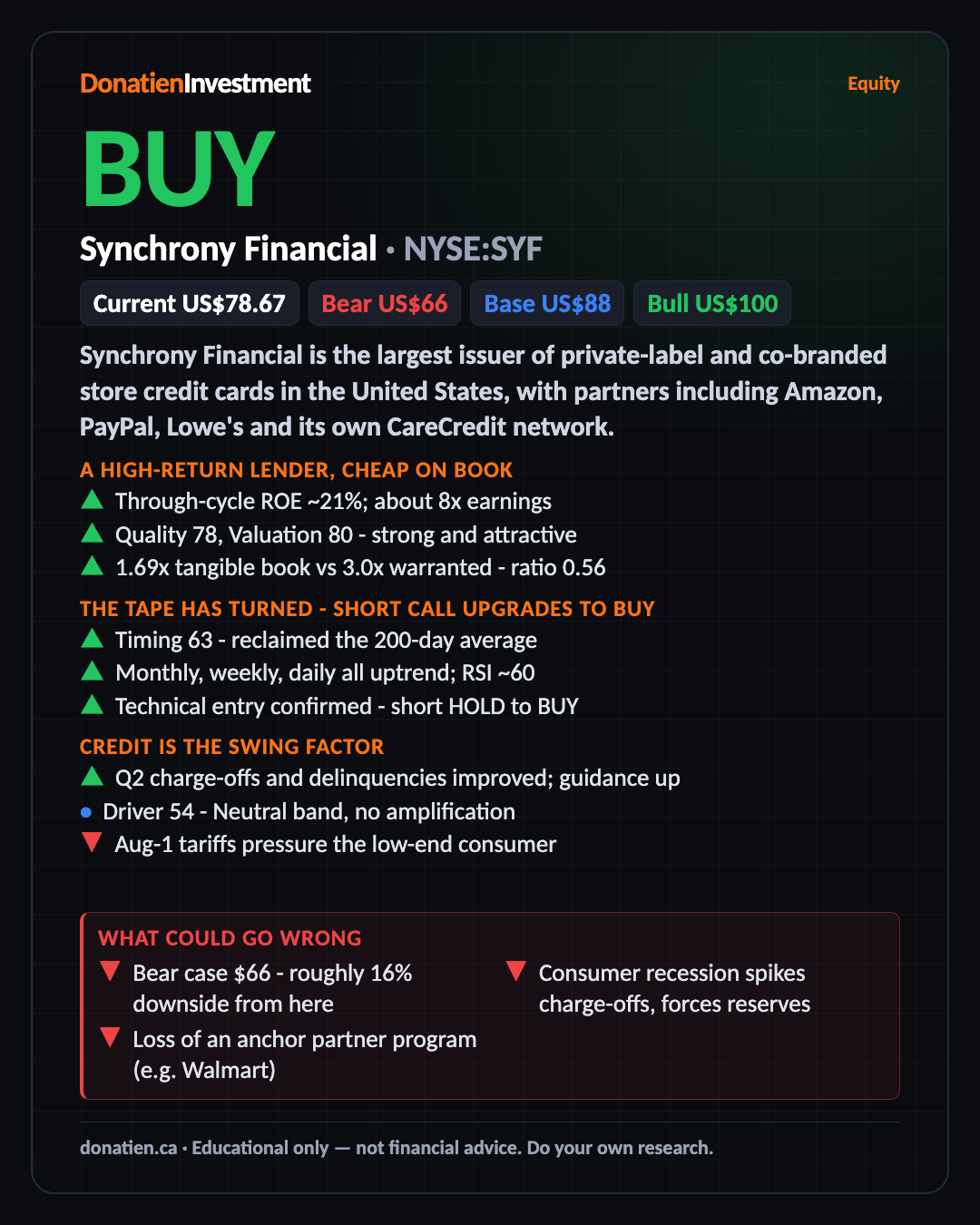
Synchrony Financial is the largest issuer of private-label and co-branded store credit cards in the United States, with partners including Amazon, PayPal, Lowe's and its own CareCredit network. It funds a hundred-billion-dollar-plus card book with its own low-cost online deposits and earns the spread. The report rates it BUY across all three horizons, at a price of seventy-eight dollars and sixty-seven cents.
A high-return lender, cheap on book
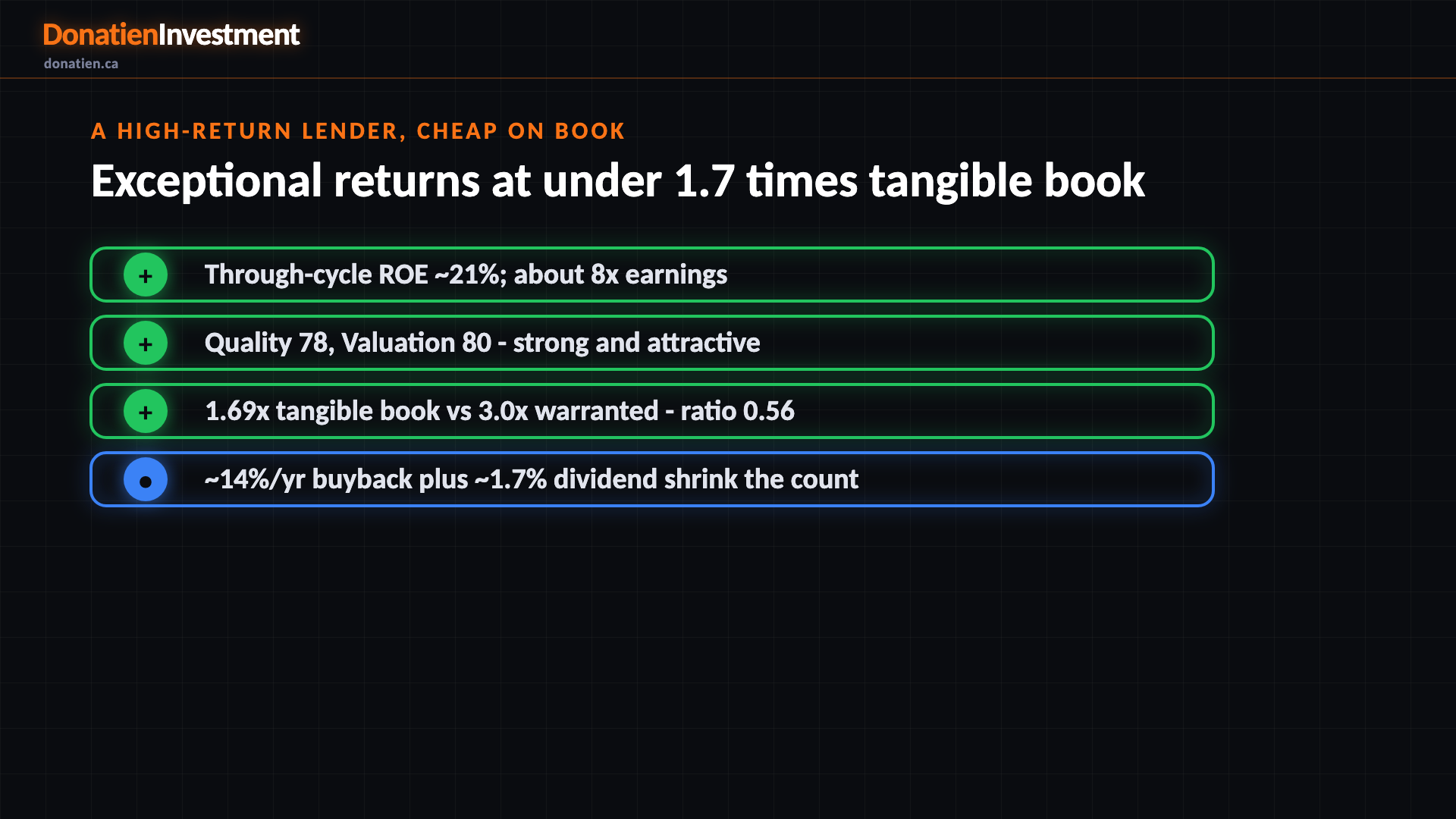
The quality here is real. Synchrony earns a return on equity around twenty-one percent through the cycle, on card economics that give it a return on assets several times a typical bank, and it runs a lean cost base. Yet the shares trade at just 1.69 times tangible book, against a warranted multiple capped at three times. That is a ratio of 0.56, squarely in the attractive band, and on trailing earnings it is about eight times. On top of that a roughly fourteen-percent-a-year buyback and a one-point-seven-percent dividend keep shrinking the share count. Cheap for the returns.
The tape has turned - short call upgrades to BUY
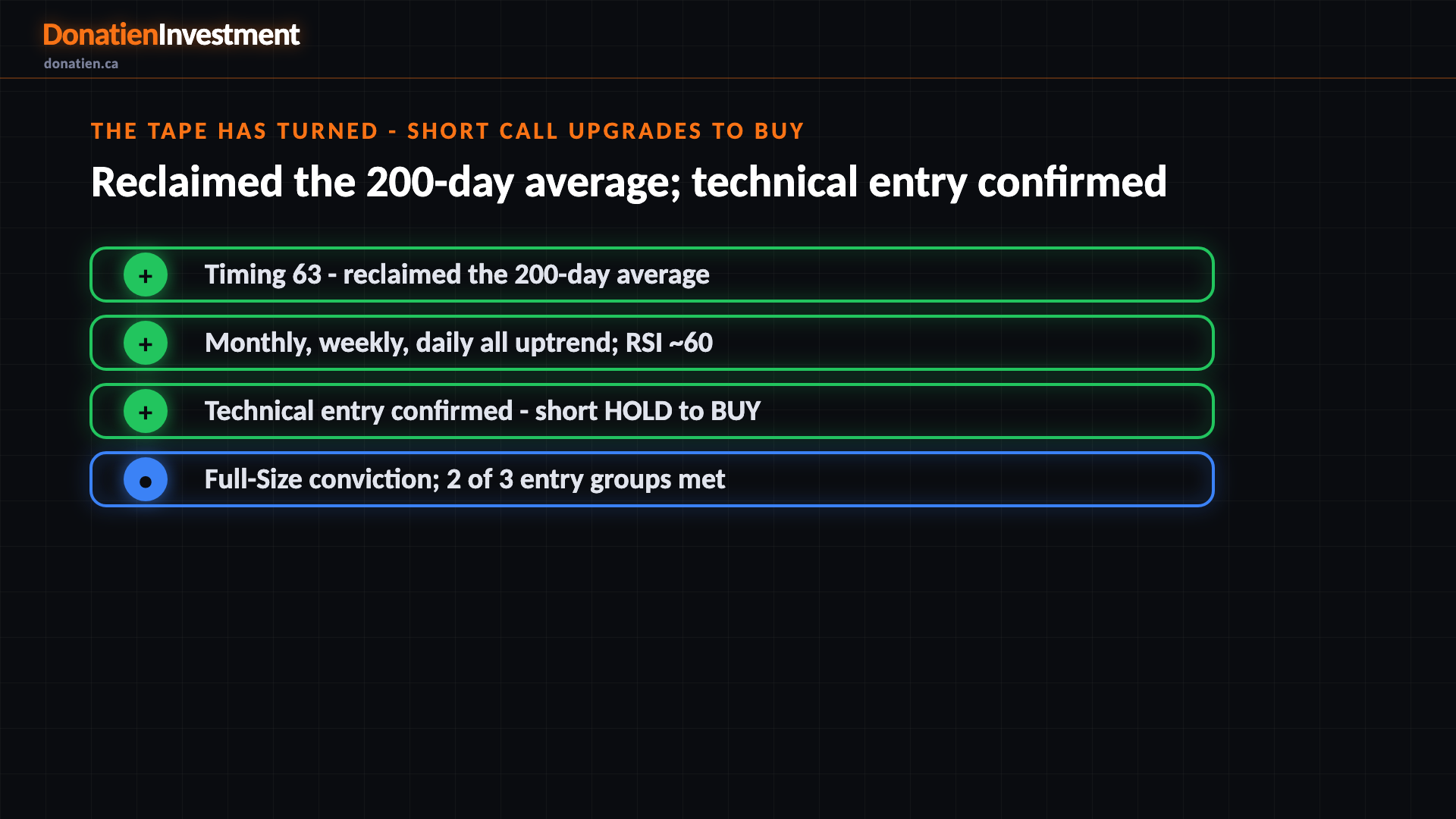
This is what changed. In late July the stock sat below a falling two-hundred-day average in a bearish tape, and the short call was hold. After a nine-point-six-percent rally it has reclaimed both its fifty and two-hundred-day averages, and the monthly, weekly and daily trends are all pointing up, with the relative-strength index near sixty, room before overbought. That lifts the timing pillar to sixty-three and confirms the technical entry, so the short-term signal upgrades from hold to buy and the conviction steps up to Full-Size, two of three entry groups met. It is no longer a wait.
Credit is the swing factor
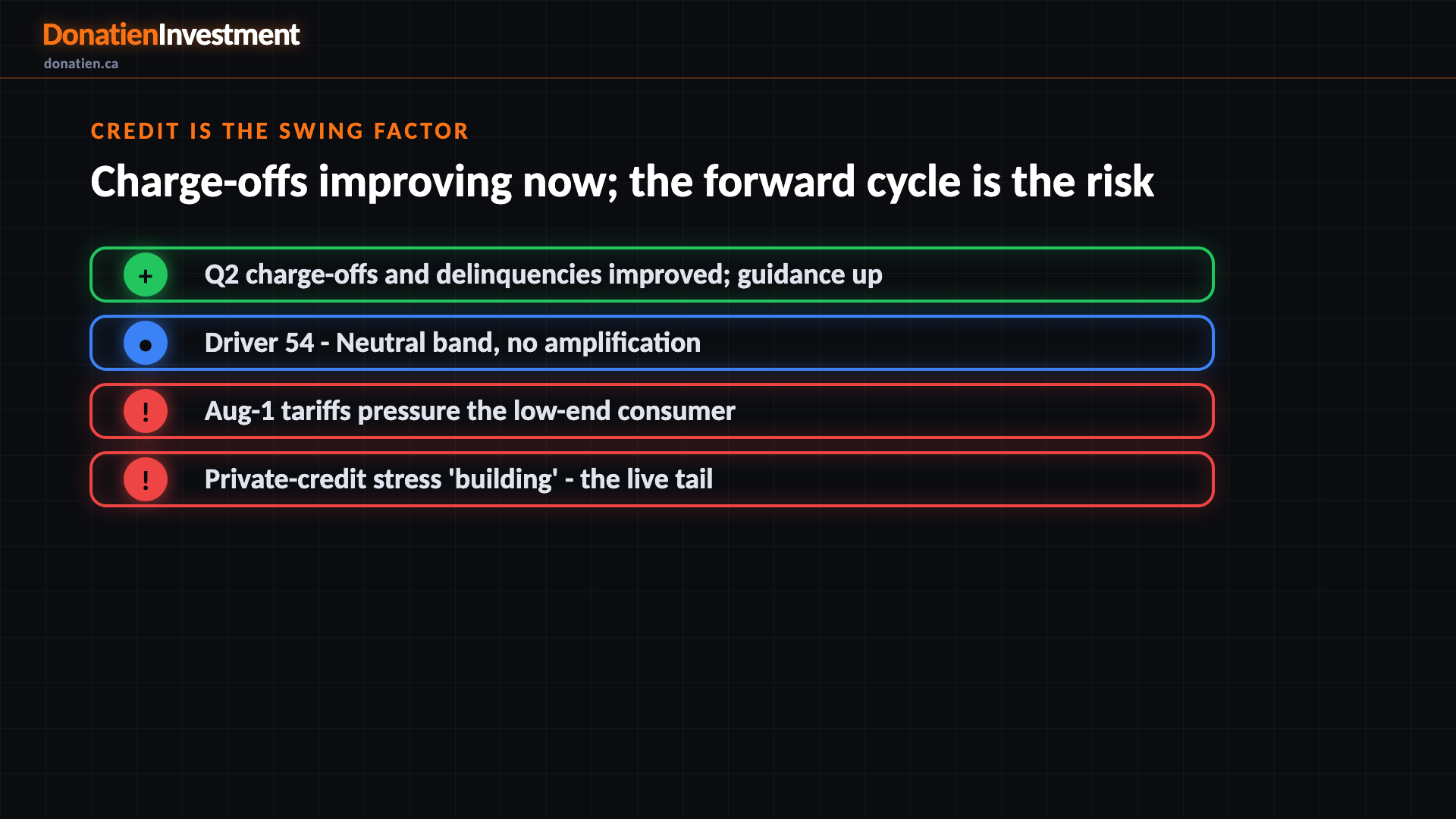
The driver is the health of the everyday American consumer, and right now it is genuinely contested rather than a clear headwind. Second-quarter net charge-offs and delinquencies improved, and management raised guidance, so credit is normalising favourably. But it is the un-hedged swing factor. The macro report flags private-credit stress building and the August-first tariff wall pressing on the lower-income consumer Synchrony serves. A neutral driver does not amplify, which is why this is a plain buy on the fundamentals and the tape, not a stronger one, and why the caution flag stays on.
What could go wrong
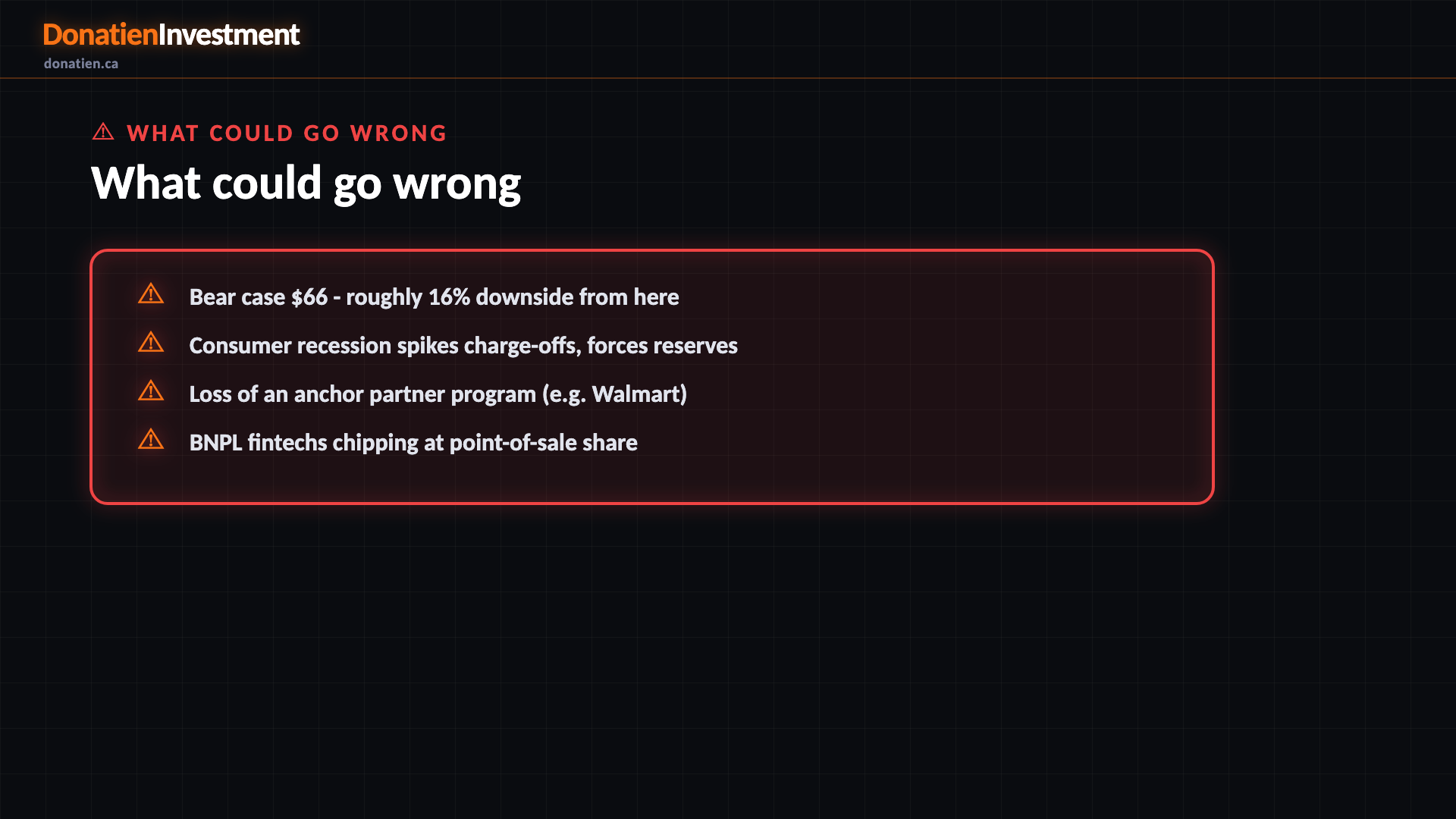
The risk here is cyclical, and it is the reason the stock is still cheap after the rally. The bear case sees the shares fall to about sixty-six US dollars, roughly sixteen percent below today. That takes a stagflation-lite consumer squeeze, with the tariff wall spiking net charge-offs and delinquencies, forcing a reserve build that dents earnings, or the private-credit stress the macro report flags spilling into consumer credit. There is also a competitive tail: Synchrony depends on a finite set of large retail-partner programs, and losing one is a step change, not a trickle, as with the historic loss of the Walmart program, while buy-now-pay-later fintechs chip at checkout. And as a high-sensitivity financial, it moves on the macro prints. This is a real risk, not a distant tail.
Risk vs Reward
The base case is eighty-eight US dollars at fifty-five percent, consensus, as low-single-digit loan growth and a roughly fourteen-percent buyback lift per-share value and the multiple drifts toward one-point-nine times book. The bull case is one hundred dollars at twenty-five percent if credit normalises faster and the Fed eases, pushing earnings toward ten and a half dollars. The bear case is sixty-six dollars at twenty percent if the consumer-credit cycle turns. The probability-weighted centre of gravity is about eighty-six dollars, roughly ten percent above today before the dividend, skewed to the upside.
The verdict
The honest read is a buy, at Full-Size. Synchrony is a genuinely high-return consumer lender at under one-point-seven times tangible book, cheap for the quality, and the tape has now turned: it has reclaimed its two-hundred-day average, which confirms the technical entry and upgrades the short call from hold to buy, alongside the medium and long buys. The one thing to watch is the consumer-credit cycle, the reason it stays cheap and the source of the bear case. This is analysis, not financial advice.
Analysis, not financial advice. Financial Freedom. Together.
Read the full report on donatien.ca →